

Attending the 2026 AI and Manufacturing Solutions Matchmaking Event in Xi’an
Our perspective on industrial AI and its relevance to laser processing
On September 22, 2026, we attended the AI and Manufacturing Solutions Matchmaking Event in Xi’an, China, organized by the Xi’an Advanced Manufacturing Association. The event connected manufacturers with AI technology providers to explore practical applications of artificial intelligence in industrial production.
According to the organizer’s post-event report, more than 380 representatives took part. For us, the event offered a useful opportunity to consider how developments in industrial AI could relate to the needs of laser cladding, metal additive manufacturing and surface engineering.
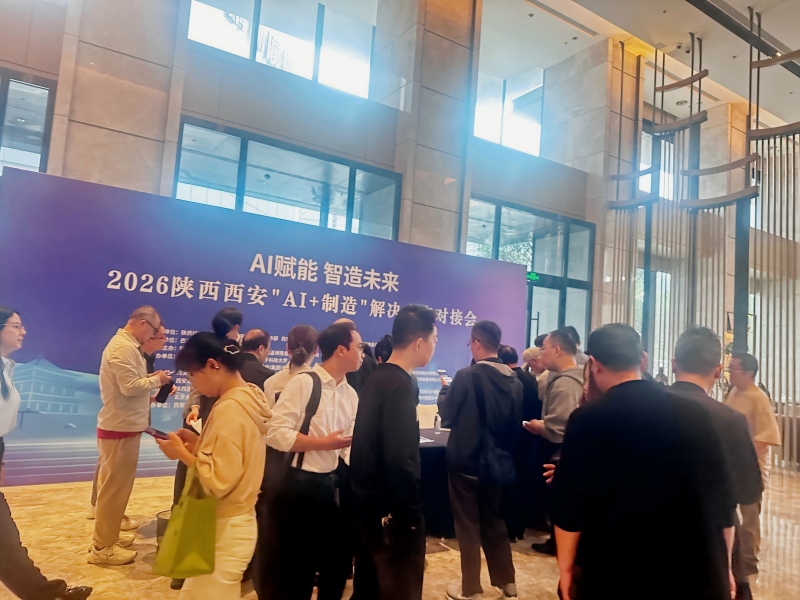

Participants at the 2026 AI and Manufacturing Solutions Matchmaking Event in Xi’an.
Connecting manufacturing needs with AI solutions
The main program covered the transition toward AI-enabled manufacturing, including an aerospace manufacturing application presentation. Other sessions addressed the integration of information technology, artificial intelligence and operational technology, alongside intelligent nondestructive testing, enterprise AI adoption and embodied robotics.
The afternoon program comprised three parallel tracks focused on equipment manufacturing, new materials and new energy storage. The organizer reported that 16 AI solutions were presented across these sessions, covering topics such as equipment lifecycle management, industrial AI agents, materials research and intelligent safety prediction.
What the event means for laser processing
From our perspective as a participant working in laser processing, the most useful question is how AI can address a clearly defined production problem. A system should be evaluated against the requirements of the workpiece, the process and the final inspection, rather than the sophistication of its software alone.
For laser cladding and metal additive manufacturing, this suggests several areas worth evaluating: using process images and sensor records to support monitoring; linking operating parameters with inspection results; and organizing production records so that quality issues can be traced and investigated more effectively. Each direction would require evaluation against the materials, equipment and acceptance criteria of the intended application.
The discussions on materials and intelligent inspection also underline the importance of reliable evidence. Before an AI-assisted method can support a production decision, its output needs to be compared with measured results under representative operating conditions. Performance on one material or workpiece should not automatically be assumed to transfer to another.
A practical perspective on intelligent manufacturing
Our takeaway is that useful industrial AI begins with a specific task and a measurable outcome. For laser processing, priorities such as process consistency, inspection traceability and equipment reliability provide a more meaningful basis for evaluation than broad claims about automation.
Participation in the event provided a wider view of the technologies being proposed for manufacturing. The value for our industry will depend on translating those ideas into solutions that can be tested, integrated and verified in real production environments.
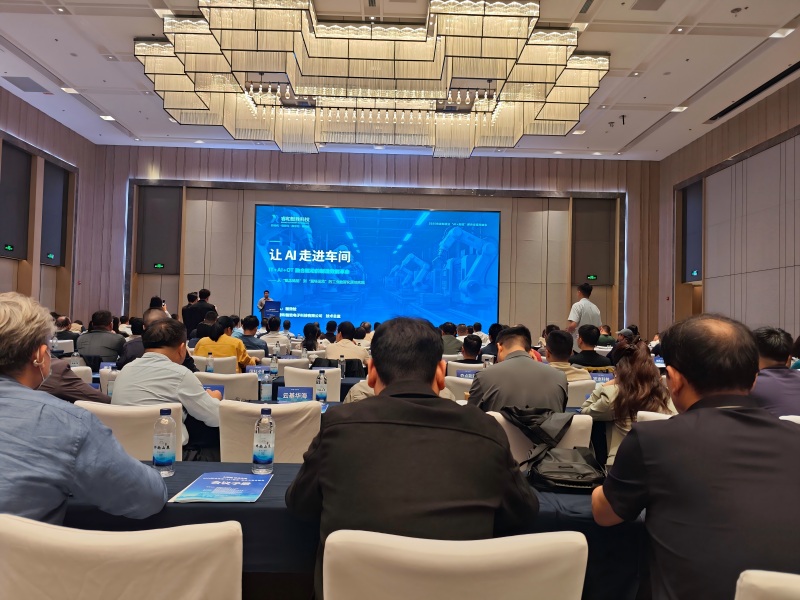
A presentation during the AI and manufacturing event in Xi’an on September 22, 2026.
Participation in the event provided a wider view of the technologies being proposed for manufacturing. The value for our industry will depend on translating those ideas into solutions that can be tested, integrated and verified in real production environments.