Laser Quenching of Gears: A Paradigm Shift in Surface Strengthening
Why Gear Surface Hardening Matters
Gears are critical transmission components used in automotive systems, industrial robotics, aerospace equipment, mining machinery, power generation, heavy machinery, and other high-load applications.
During operation, gear teeth are repeatedly exposed to contact pressure, cyclic loading, friction, and impact. Over time, these conditions can lead to surface wear, pitting, scuffing, fatigue damage, and dimensional changes.
Surface hardening is therefore widely used to improve wear resistance while maintaining sufficient toughness in the gear core.
Traditional processes such as carburizing and induction hardening remain important in gear manufacturing. However, applications requiring localized treatment, flexible processing paths, lower heat input, and tighter dimensional control are creating increasing demand for laser surface hardening.
What Is Laser Hardening of Gears?
Laser hardening, sometimes referred to as laser quenching, is a localized surface heat-treatment process.
A controlled laser beam rapidly heats selected areas of the gear surface to the required transformation temperature without intentionally melting the material. Heat is then quickly conducted into the colder substrate.
For suitable steels and process conditions, this creates a self-quenching effect and forms a hardened surface layer.
The laser can be directed to specific areas such as:
· Tooth flanks
· Tooth roots
· Tooth tips
· Local wear zones
· Selected circumferential surfaces
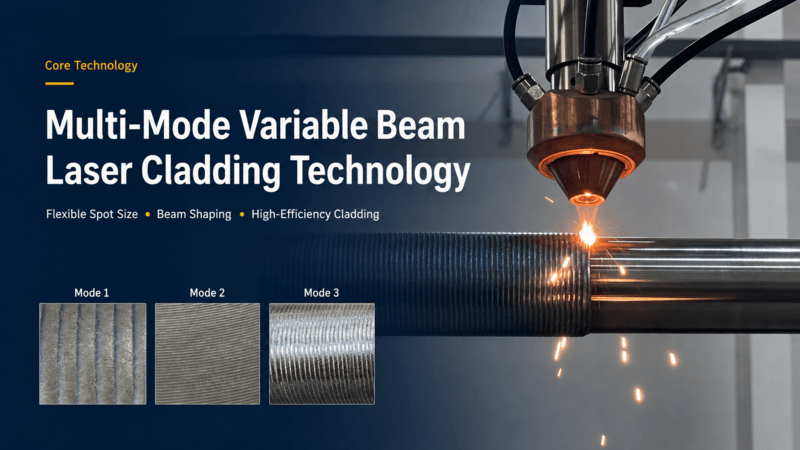
By adjusting laser power, beam size, scanning speed, working distance, and processing path, the hardening pattern can be matched to different gear geometries and performance requirements.
Laser Hardening vs. Induction Hardening for Gears
Induction hardening is a mature and efficient process that uses electromagnetic induction to rapidly heat the gear surface. It is particularly suitable for established high-volume production.
However, induction systems often require carefully designed coils and process settings for different gear sizes and geometries.
Laser hardening uses an optical energy source and programmable motion instead of a dedicated induction coil.
This makes laser hardening particularly attractive for applications requiring:
· Selective treatment of specific gear areas
· Complex processing paths
· Reduced heat input to surrounding material
· Flexible production of different component types
· CNC or robotic automation
· Precision surface treatment
Laser hardening should not be considered a universal replacement for induction hardening. The suitable process depends on production volume, material, component geometry, required hardened pattern, dimensional tolerance, and manufacturing cost.
Key Advantages of Laser Hardening for Gears
1. Selective and Localized Hardening
One of the main advantages of gear laser hardening is that energy can be applied only to the areas that require treatment.
The laser path can follow tooth flanks, roots, or other selected regions without unnecessarily heating the entire component.
This is particularly useful when different areas of the gear have different hardness or performance requirements.
2. Reduced Thermal Distortion
Dimensional accuracy is critical for precision gears.
Because laser hardening concentrates heat within a relatively small processing zone, the surrounding material receives less thermal input than in processes that heat a larger volume of the component.
Under optimized conditions, this can help reduce thermal distortion and the amount of subsequent grinding or dimensional correction required.
The final result depends on factors including:
· Material
· Initial microstructure
· Gear geometry
· Laser power
· Beam profile
· Scanning speed
· Processing path
· Existing residual stress
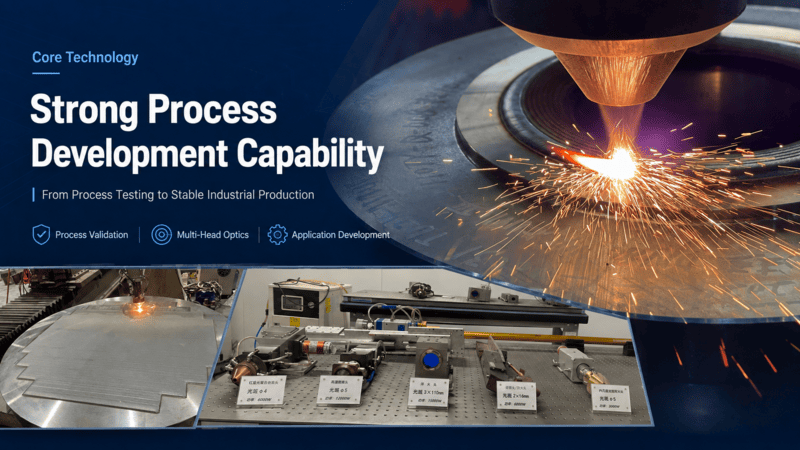
For this reason, representative process testing is recommended before production parameters are finalized.
3. Controlled Surface Hardness and Hardened Depth
Laser hardening can create a hardened martensitic surface region in suitable steels while maintaining a tougher underlying core.
The final surface hardness and hardened depth depend on the material and process conditions rather than the laser hardening head alone.
Important variables include:
· Carbon and alloy content
· Initial heat-treatment condition
· Laser power density
· Beam size
· Scanning speed
· Thermal history
· Overlap strategy
Materials such as 45 steel, 40Cr, 42CrMo, and other hardenable engineering steels can be suitable candidates depending on their initial condition and application requirements.
4. Flexible Processing for Complex Gear Geometries
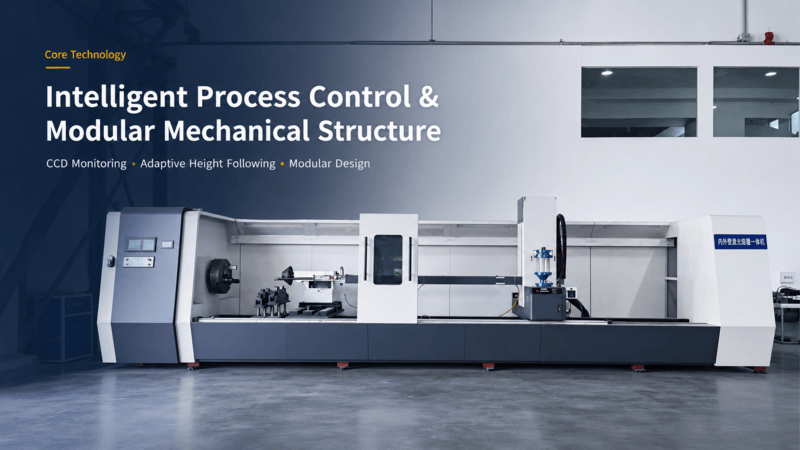
Laser hardening can be integrated with CNC machines, robotic systems, rotary axes, and positioners.
This enables programmable treatment of:
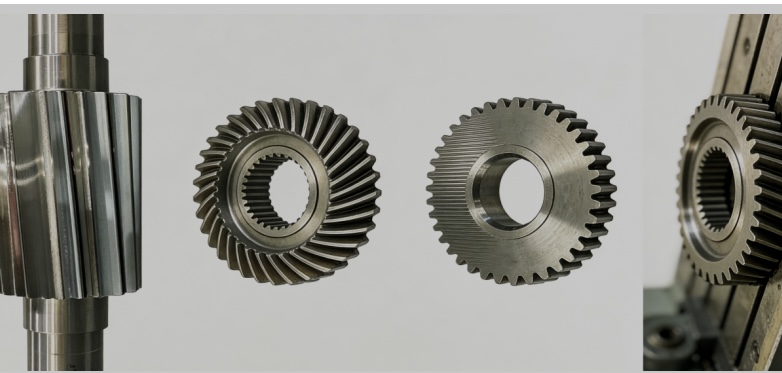
· Spur gears
· Helical gears
· Bevel gears
· Internal gears
· Gear rings
· Large transmission gears
Actual feasibility depends on optical access, tooth geometry, working distance, beam orientation, and the required hardening pattern.
Compared with processes that rely heavily on geometry-specific heating tooling, laser hardening can provide greater flexibility for small-batch production, multiple component types, repair, and industrial remanufacturing.
Typical Industrial Applications
Laser hardening of gears can be applied in industries including:
Automotive and EV TransmissionFor transmission gears, shafts, and other precision drivetrain components requiring localized wear resistance.
Industrial RoboticsFor high-precision gear systems operating under repeated cyclic loads.
Heavy Machinery and Mining EquipmentFor large gears and transmission components exposed to impact, wear, and demanding operating conditions.
Power GenerationFor gearboxes, shafts, and transmission components used in energy equipment.
Aerospace and Precision MachineryFor high-value components where dimensional stability and controlled surface treatment are important.
Laser Hardening and Laser Cladding: What Is the Difference?
Laser hardening and laser cladding are both laser surface engineering technologies, but they serve different purposes.
Laser hardening modifies the microstructure of the existing material through controlled heating and self-quenching. No additional coating material is normally deposited.
Laser cladding deposits an additional alloy layer onto the component surface and creates a metallurgical bond with the substrate.
Laser hardening is mainly used to increase surface hardness through phase transformation, while laser cladding can also provide:
· Dimensional restoration
· Wear-resistant coatings
· Corrosion protection
· Repair of worn components
· Surface remanufacturing
The appropriate process depends on the failure mode and target performance of the component.
FAQ
Can laser hardening completely eliminate gear distortion?
No. Laser hardening can help minimize thermal distortion because the heat input is localized, but the final dimensional change depends on the material, geometry, initial condition, and process parameters.
Does laser hardening require water or oil quenching?
For suitable materials and process conditions, rapid heat conduction into the colder substrate can provide self-quenching, so external water or oil quenching media are generally not required.
Can laser hardening be used for different gear sizes?
Yes. Beam size, optical configuration, laser power, scanning speed, and motion programs can be adjusted for different components. Larger differences in gear size or hardening width may require a different optical configuration.
Recent Articles