Laser Cladding for Glass Molds: Repair, Wear Protection & Remanufacturing
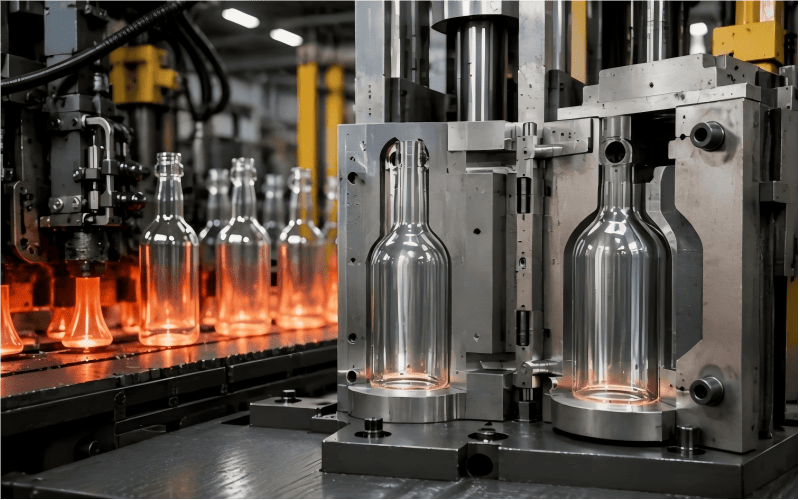
In glass container manufacturing, mold condition directly affects forming accuracy, surface finish, production stability, and maintenance frequency. Glass bottle molds, glassware molds, and other hollow-glass tooling are repeatedly exposed to thermal cycling, contact with hot glass, friction, oxidation, erosion, and local sticking. As a result, mold cavities, parting lines, neck and finish transition areas, shoulders, bottom transitions, and other detailed features are often the first locations to experience wear or dimensional drift.
Traditional glass mold repair may involve conventional welding, local grinding, surface treatment, or replacement of worn mold components. These methods remain useful, but they can involve relatively high heat input, larger repair zones, additional machining, or limited control over the exact area being rebuilt. For high-value tooling and production lines where dimensional consistency matters, a more localized repair method can provide practical advantages.
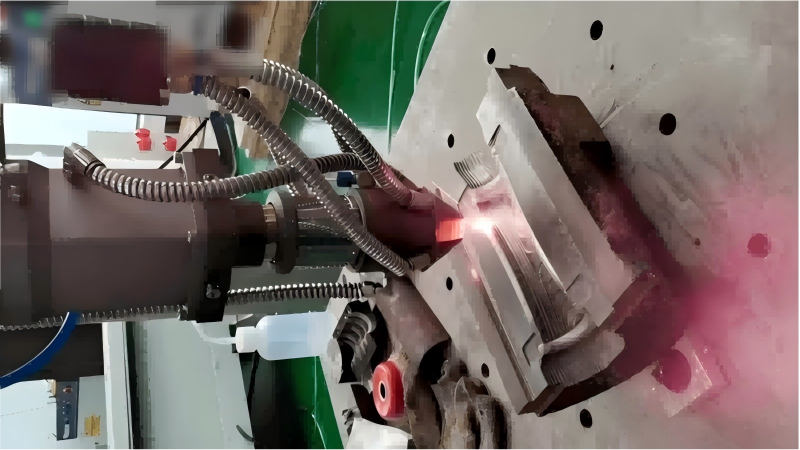
Glass mold laser cladding is a localized surface engineering process that deposits an alloy layer onto selected wear areas while forming a metallurgical bond with the substrate. In some industrial contexts, the process is also described as laser metal deposition (LMD). By placing material only where it is needed, laser cladding can support glass mold repair, glass mold remanufacturing, and preventive surface strengthening with controlled deposition and machining allowance.
Key Benefits of Laser Cladding for Glass Molds
· Localized repair and strengthening of high-wear areas instead of treating or replacing the entire mold.
· Metallurgical bonding between the cladding layer and the substrate for a durable repaired surface.
· Concentrated heat input and a relatively small heat-affected region, helping reduce distortion and post-repair machining.
· Flexible alloy selection based on substrate material, wear mechanism, thermal cycling, oxidation, and service requirements.
· Support for both preventive strengthening of new molds and repair or remanufacturing of worn molds.
1. Why Do Glass Molds Need Local Laser Cladding?
Glass molds do not wear uniformly. The areas most directly involved in forming, opening and closing, sealing, and contact with hot glass usually degrade first. Typical high-wear locations include cavity profiles, parting lines, neck or finish transition areas, shoulders, bottom corners, and local details.
When only a limited area has worn, replacing the entire mold may not be economical. Laser cladding allows worn material to be rebuilt selectively. After cladding, precision machining, grinding, or polishing can be used to restore the required cavity dimensions, profile, and surface finish.
This “local repair + local strengthening” strategy is especially relevant to glass bottle mold repair because it helps preserve the main mold body while concentrating repair work on the areas that actually control service life and product quality.
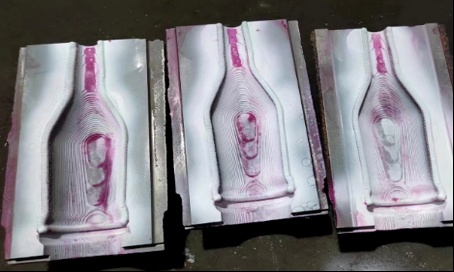
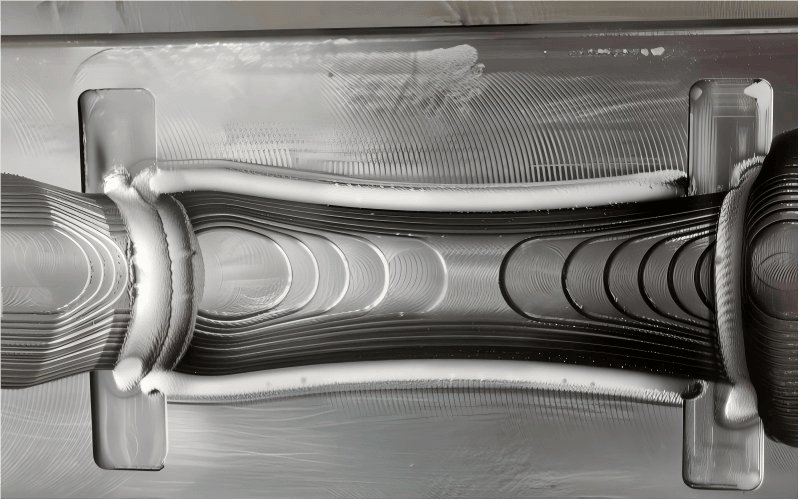
Glass bottle mold samples for cladding inspection and validation. Example of a localized laser-clad region on a glass bottle mold cavity.
2. Typical Laser Cladding Applications for Glass Bottle Molds
Glass bottle molds are one of the most representative applications for precision laser cladding. Depending on the mold design, selected cavity surfaces, parting lines, neck and finish transitions, shoulder profiles, and bottom details can be rebuilt or strengthened along a programmed deposition path.
This approach can be used in two ways. For new molds, laser cladding can provide preventive strengthening at known high-wear locations. For molds already in service, the process can restore worn geometry and create a new wear-resistant surface before final machining.
For complex glass container mold repair, the main advantage is control: the deposition area and repair allowance can be defined more precisely than with broad-area manual build-up. This is especially useful when the repaired surface must later be machined or polished to a tight profile.
For customers evaluating laser cladding for glass molds, the practical objectives are usually straightforward: improve wear resistance at critical locations, extend usable mold life, reduce unnecessary mold replacement, and shorten the downtime associated with repeated refurbishment.
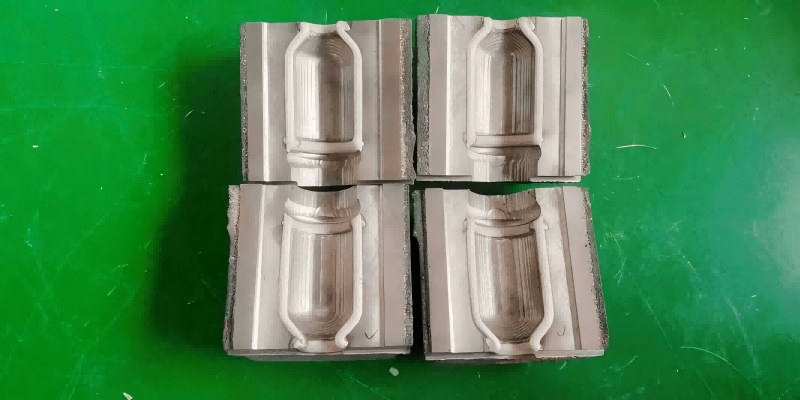
Glass bottle mold components after cladding and subsequent finishing.
3. Glassware Molds, Cup Molds & Complex Cavities
Laser cladding is not limited to glass bottle molds. Glassware molds, cup molds, and tooling with complex cavities can also experience local wear, surface degradation, and dimensional loss during repeated thermal cycling.
For these components, laser cladding can rebuild selected cavity regions and create a functional wear-resistant layer only where needed. The controlled deposition path and localized heat input provide a stable basis for subsequent finishing and polishing, which is important when both geometry and surface quality must be restored.
This makes laser cladding for glass mold cavity repair especially attractive for high-value tooling that would otherwise require frequent replacement or repeated manual repair.
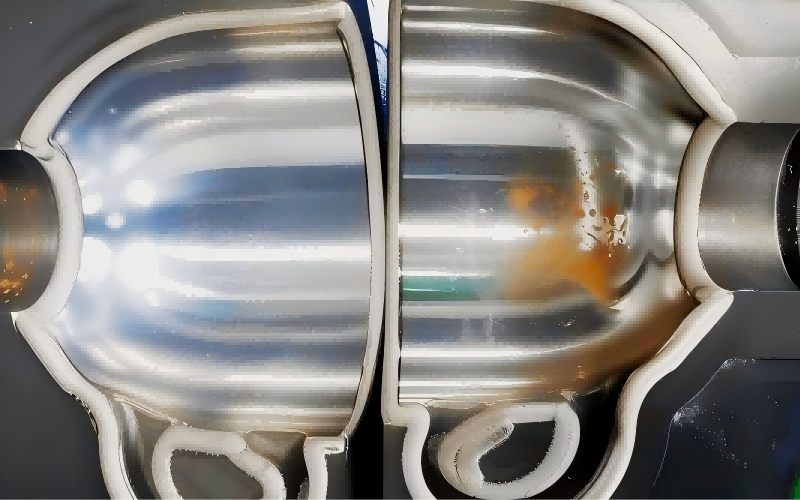
Glassware mold cavity with critical forming areas suitable for local laser cladding and surface strengthening.
4. Core Advantages for Glass Mold Repair & Remanufacturing
Application Need | Traditional Approach | Laser Cladding Approach | Main Value |
High-wear area strengthening | Local repair, build-up welding, or frequent replacement | Localized laser cladding | Improved wear resistance and fewer unnecessary replacements |
Dimensional restoration | Repair welding followed by grinding | Laser cladding + precision finishing | More controlled repair area and machining allowance |
High-value mold remanufacturing | Scrap or replace the worn component | Rebuild and reuse selected areas | Supports longer mold use and lower lifecycle cost |
Complex cavity repair | Difficult heat and distortion control | Localized deposition with concentrated heat input | Helps control distortion and post-repair finishing work |
5. How LZ Optical Supports Glass Mold Applications
· Localized laser cladding and surface strengthening for glass bottle molds, glassware molds, and related cavity components.
· Dimensional restoration, wear-resistant layer development, and glass mold remanufacturing for worn areas.
· Selection of suitable cladding materials and deposition strategies based on mold geometry, substrate material, service conditions, and failure mode.
· Process planning that considers final machining, grinding, polishing, repair allowance, and heat-affected region.
· Sample trials, process validation, and application development before production implementation.
6. Discuss Your Glass Mold Repair Project
If you are evaluating glass bottle mold repair, glass mold parting line repair, or laser cladding for a worn mold cavity, send us the basic project information below. Our engineering team can review the application and recommend a suitable cladding head, equipment configuration, material system, and process route.
· Mold type and photos or drawings
· Substrate material
· Worn or damaged area
· Original dimensions and required restored geometry
· Target wear resistance or service-life objective
· Available machining allowance and required final surface finish
7. FAQ for Website Use
Q1. Which areas of a glass mold are most suitable for laser cladding?
The most suitable areas are usually locations that experience repeated wear, dimensional loss, or surface degradation, such as key cavity profiles, parting lines, neck and finish transitions, shoulders, bottom transitions, and local detail features.
Q2. Can laser cladding be used for glass mold parting line repair?
Yes. Parting lines and other localized wear areas can be rebuilt by laser cladding when the geometry, access, substrate material, and repair allowance are suitable. Final grinding or machining is normally used to restore the required fit and surface condition.
Q3. Is laser cladding suitable for new molds or only for worn molds?
Both are possible. New molds can receive preventive local strengthening at known high-wear locations, while worn molds can be repaired and remanufactured by rebuilding damaged areas. The process route depends on mold geometry, substrate material, failure mode, and service requirements.
Q4. Is post-processing required after glass mold laser cladding?
Usually, yes. Precision machining, grinding, or polishing is commonly required after cladding to restore cavity dimensions, profile accuracy, and surface finish. One benefit of laser cladding is that the repair allowance can be planned more precisely for subsequent finishing.
Q5. What materials can be used for glass mold laser cladding?
Material selection depends on the mold substrate, operating temperature, wear mechanism, thermal cycling, and required surface properties. Wear-resistant and heat-resistant alloy systems, including nickel-based or other compatible alloys, may be evaluated and should be validated through sample or component testing.
Q6. What information should I provide for a glass mold repair evaluation?
Please provide mold photos or drawings, substrate material, worn area, target dimensions, expected service conditions, and final machining requirements. This information helps determine the cladding material, processing head, deposition path, and recommended process parameters.