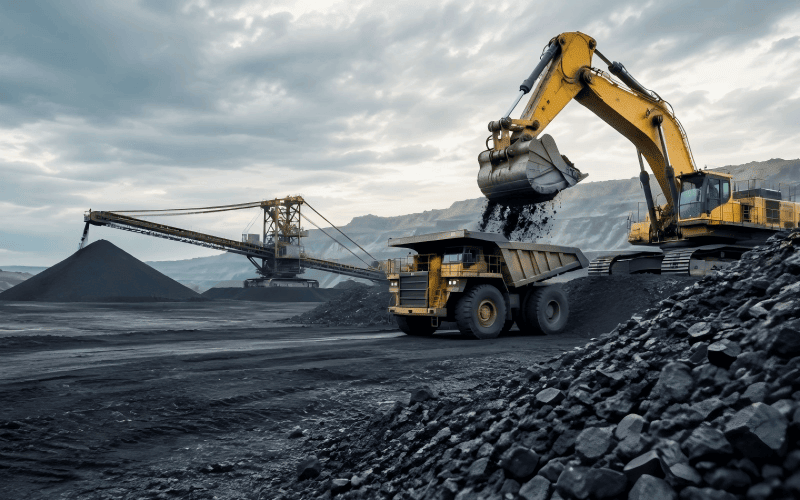

Laser cladding for mining equipment provides a durable, low-heat-input solution for restoring and strengthening high-value components exposed to wear, corrosion, impact, and heavy loads. In coal mining equipment repair, it is commonly applied to hydraulic support columns, hydraulic jacks, shearer cutting picks, scraper conveyor pans, shafts, cylinders, and sealing surfaces.

The coal industry has become an important application field for laser cladding, and market adoption continues to increase. In mining machinery, laser-cladded cutting picks can achieve a 100% improvement in wear resistance, helping reduce equipment failure rates. Hydraulic support columns repaired by laser cladding can last one to two times longer than new replacement parts.
At the policy level, China's equipment manufacturing plans have listed laser cladding among strategic emerging technologies and provide support through additional R&D tax deductions and first-set equipment insurance subsidies. These measures have directly contributed to a 220% increase in related patent applications compared with 2020. Under China's carbon-peaking and carbon-neutrality goals, the environmental advantages of replacing conventional electroplating with laser cladding have become increasingly important. It was projected that this transition could help the sector reduce carbon emissions by 200,000 metric tons per year in 2025.
Advances in ultra-high-speed laser cladding have further accelerated commercialization. Processing efficiency can be more than three times that of conventional systems, while heat input can be reduced by 60% and downstream machining costs by 40%. As robotic automation expands and regional markets continue to mature, laser cladding applications in coal mining are expected to see broader growth over the next five years.

In coal mining applications, laser cladding is mainly used for surface strengthening, repair, and remanufacturing of critical components such as hydraulic support columns, hydraulic jacks, shearer cutting picks, and scraper conveyor middle pans.
A typical laser cladding repair process for hydraulic support columns includes five steps:
1. Surface turning - remove the original coating and corrosion pits.
2. Pre-cladding non-destructive testing - use magnetic-particle or ultrasonic inspection to detect cracks.
3. Cladding deposition - apply the coating by off-axis pre-placed powder deposition or coaxial synchronous powder feeding.
4. Post-cladding turning - retain sufficient machining allowance for grinding and polishing.
5. Grinding and polishing - restore the component to the specified dimensions and surface roughness.
Alloy powder selection is matched to the service environment: nickel-based alloys such as Ni625 for corrosion resistance; cobalt-based alloys such as Stellite 6 for high-temperature wear resistance; iron-based alloys for general repair; and tungsten carbide (WC) composite coatings for extreme wear conditions.
Compared with conventional electroplating, laser cladding provides several important advantages. The coating and substrate form a metallurgical bond with a reported bond strength of up to 400 MPa, eliminating the risk of chrome-layer peeling. Cladding hardness can reach HRC 50-60, and layer thickness can reach 1-3 mm, compared with only 0.03-0.08 mm for electroplating. The process also produces no chromium mist or chromium-containing wastewater, supporting greener manufacturing.
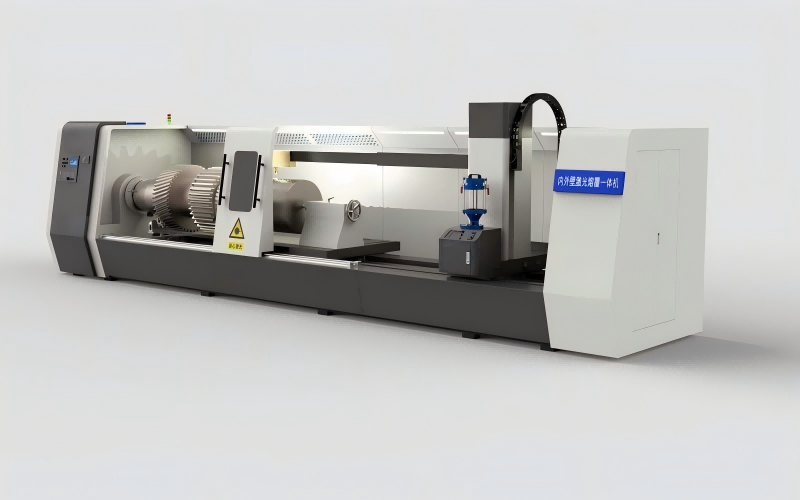
Figure 1. Integrated equipment for laser cladding the inner and outer surfaces of coal-mine hydraulic support columns
Table 1. Comparison of Laser Cladding and Conventional Surface-Treatment Processes
Surface Treatment | Typical Single-Layer Thickness (mm) | Bonding Mechanism | Heat-Affected Zone | Environmental Impact |
Laser cladding | 0.5-3.0 | Metallurgical bond | Small | No pollution |
TIG arc deposition | 2-4 | Metallurgical bond | Large | No pollution |
High-velocity flame spraying (HVOF) | 0.01-0.05 | Mechanical bond | Relatively small | Dust and noise |
Plasma spraying | 0.02-0.05 | Mechanical bond | Large | Noise and dust |
Hard chrome electroplating | <0.1 | Physical bond | None | Heavy-metal pollution |

Case 1: Laser Cladding Repair for Hydraulic Support Columns
Powered roof supports are among the most important support systems in coal mining. Their columns connect the canopy and base, withstand roof loads measured in tens of thousands of tonnes, and operate under high pressure, heavy loads, and severe corrosion underground.
Columns restored by conventional electroplating typically have a surface hardness of only HRC 45-55 and a service life of 6-8 months. Chrome mist and chromium-containing wastewater generated during plating also create serious environmental concerns, and the process is gradually being phased out in many applications.
Laser cladding can also reduce the cost of subsequent repairs. With hard-chrome plating, even a small area of corrosion, impact damage, or scratching may require the entire chrome layer to be machined off and replated. With laser cladding, local damage can be repaired locally, avoiding full-length reprocessing and significantly reducing turnaround time and cost.
The technology is already used to restore and reuse shaft-type and cylindrical components, including hydraulic support columns, motor shafts, and telescopic sleeves in roadheader cutting units. Applications are also extending to shearer shafts, valve-block sealing surfaces, and hydraulic cylinders in the haulage unit.
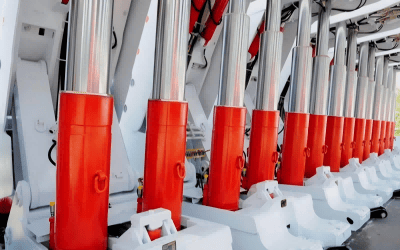
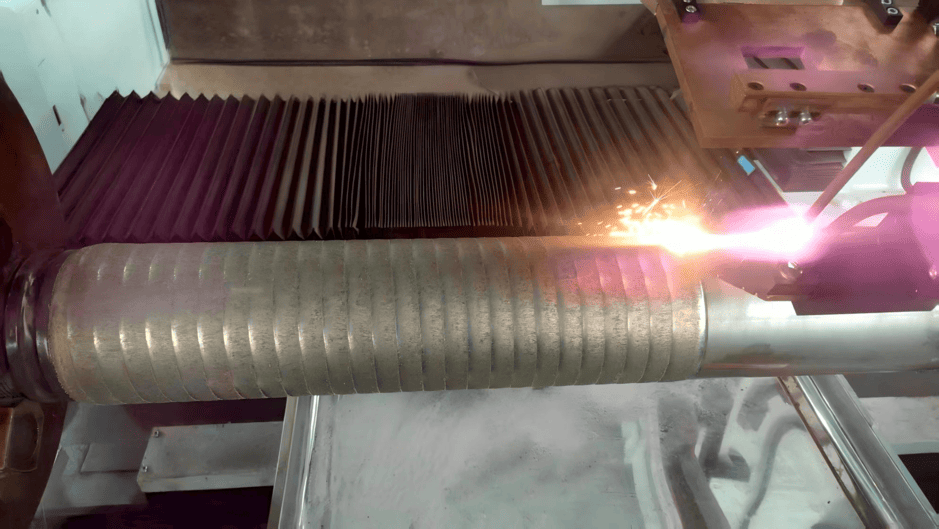
Figure 2. Hydraulic support columns and laser cladding repair in production
Case 2: Wear-Resistant Laser Cladding for Shearer Cutting Picks
Shearer cutting picks are critical consumable components in coal mining and roadway development, where they break and cut coal and rock. Their performance directly affects shearer productivity, power consumption, operating stability, and the service life of related components.
During operation, picks are exposed to high-cycle compressive stress, shear stress, and impact loading. Typical failure modes include carbide-tip loss, edge chipping, body wear, and, in severe cases, body fracture. Frequent replacement increases operating costs and causes machine downtime.
Laser cladding offers an effective way to extend pick life. A high-performance wear-resistant alloy layer is deposited on the pick body to improve surface hardness and wear resistance, protect the carbide tip, and extend overall service life. Research by a team led by Professor Cheng Yanhai at China University of Mining and Technology indicates that a dense, high-hardness laser-cladded layer can protect the carbide tip under long-term wear and corrosive-media exposure, significantly extending pick service life.
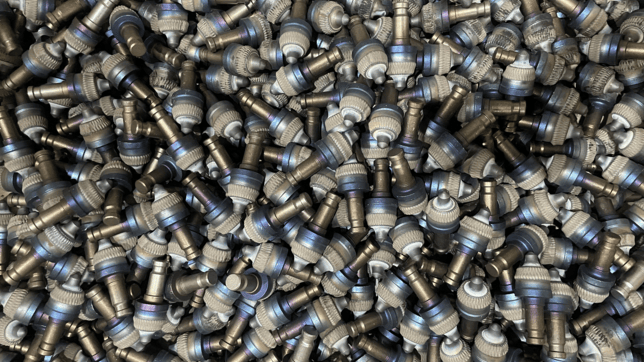
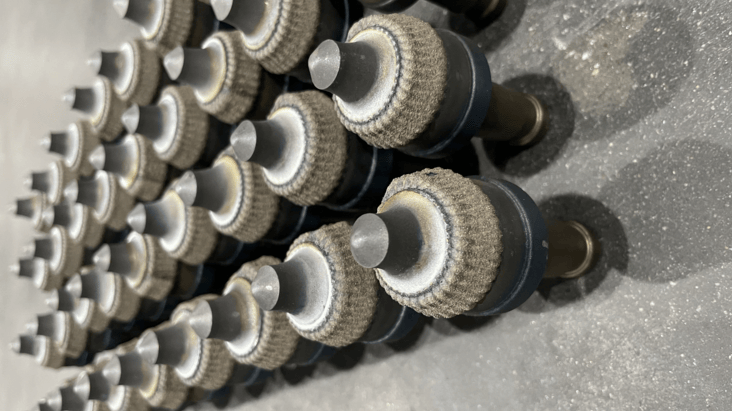
Figure 3. Wear-resistant alloy layers laser-cladded onto conical shearer cutting picks

Q1. What are the main advantages of laser cladding over hard chrome electroplating?
The key advantages include:
1. Higher bond strength - the cladding layer and substrate form a metallurgical bond with a reported strength of up to 400 MPa, while an electroplated layer is physically bonded and may peel.
2. Greater repair capability - the laser-cladded layer is typically 0.3-1.5 mm thick, compared with only 0.03-0.05 mm for electroplating.
3. Cleaner processing - no chrome mist or chromium-containing wastewater is generated, avoiding heavy-metal pollution.
4. Lower secondary-repair cost - localized damage can be repaired locally without replating the entire column.
Q2. How much can laser cladding extend the service life of a coal-mine hydraulic support column?
Based on engineering application data, laser-cladded hydraulic support columns provide a substantial service-life improvement. In corrosive environments such as acidic mine water, service life can reach 18 months, compared with 6-8 months for a new component - an increase of one to two times.
Q3. Which coal-mining equipment and components are suitable for laser cladding?
Typical applications include:
1. Hydraulic supports - repair and strengthening of the inner and outer surfaces of intermediate cylinders and plungers, plus surface treatment of hydraulic-jack piston rods.
2. Shearers - wear strengthening of cutting picks; repair of reducer shafts and gear shafts; and restoration of telescopic sleeves in cutting units.
3. Scraper conveyors - wear strengthening of middle-pan plates and bottom plates, plus repair of worn trough bodies.
4. Roadheaders - repair of shaft-type and cylindrical parts, including telescopic sleeves in the cutting unit.
5. Other mining equipment - repair of motor shafts, valve-block sealing faces, and haulage-unit hydraulic cylinders.
As the technology continues to mature, applications are moving from standalone repair toward integrated manufacturing and repair, gradually covering the full remanufacturing chain for key components used in fully mechanized coal mining and roadway-development equipment.
Q4. Does laser cladding cause thermal distortion of the substrate?
Laser cladding has very limited thermal impact on the substrate, which is a major advantage over conventional weld overlay. Because laser energy is highly concentrated and applied for a very short time, the micro-melt layer is approximately 0.05-0.1 mm and the substrate heat-affected zone is generally 0.1-0.2 mm. The substrate temperature rise during processing is reported to remain below 200 degrees C, resulting in minimal distortion. Micro-melting and solidification of the substrate and alloy powder are completed within approximately 0.3 seconds, reducing the risk of overheating, distortion, and microstructural degradation.
For ultra-high-speed laser cladding, heat input can be reduced by a further 60%, and the heat-affected proportion can be controlled below 3%. This helps prevent dimensional deviations even on large trough structures. For components with strict straightness requirements, such as hydraulic support columns, pre-repair bending can be corrected to no more than 2 parts per thousand (2 per mille), and post-cladding dimensional accuracy can meet ISO tolerance grade f9.
Discuss Your Mining Equipment Cladding Application
Send us your component drawings or application requirements, including component type, base material, dimensions, damaged area, operating conditions, target coating material, required layer thickness and hardness, and expected service life. We can then evaluate process feasibility and recommend an appropriate laser cladding process and equipment configuration.