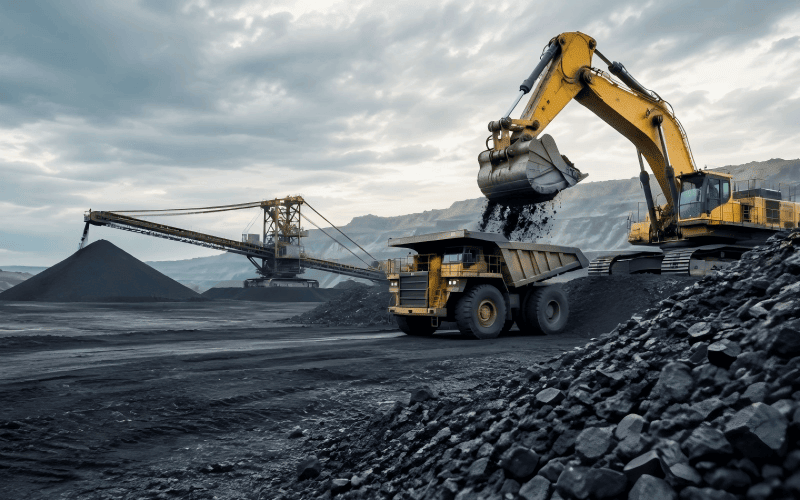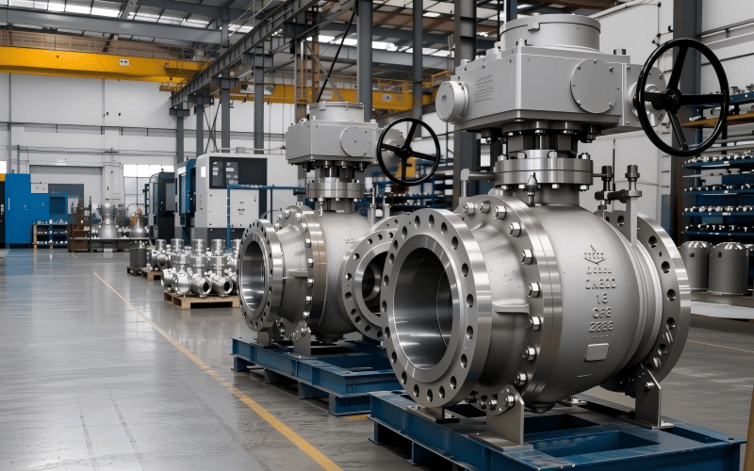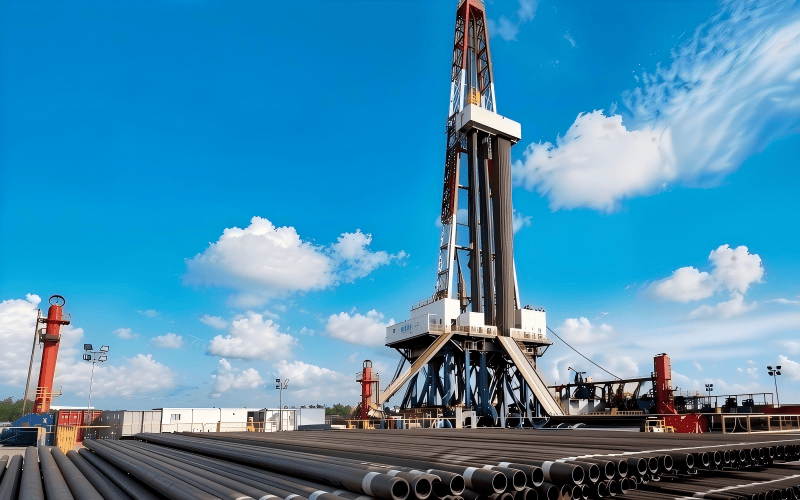
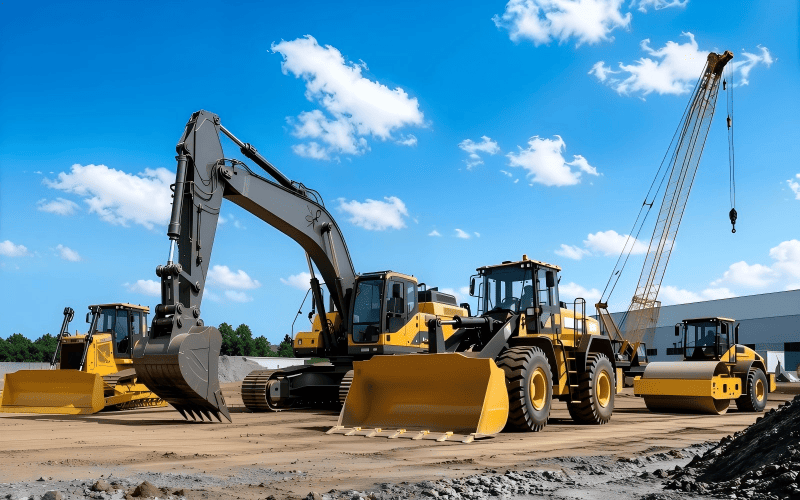
In the engineering machinery industry, hydraulic cylinder piston rods, slewing rings, large shafts, flange mating surfaces, and other high-load contact areas are exposed to abrasive wear, impact loads, corrosive media, cyclic stress, and sealing friction. Conventional surface strengthening and repair methods include induction hardening, bulk heat treatment, hard chrome plating, weld repair, and high-frequency hardening. For large components, localized treatment, distortion control, environmental compliance, and remanufacturing efficiency, these processes may involve long cycle times, high heat input, extensive post-machining, or multiple process steps. In overseas markets, these applications are commonly searched under terms such as construction equipment surface treatment, heavy machinery component repair, hydraulic cylinder repair, and laser surface hardening for heavy-duty components.
Laser cladding and laser hardening are becoming important upgrades in engineering machinery surface engineering. Laser cladding deposits a wear-resistant, corrosion-resistant, or functional alloy layer onto the substrate to form a metallurgical bond. Laser hardening rapidly heats the surface locally with a high-energy laser beam, while self-cooling by the substrate enables microstructural transformation and, for many medium-carbon and low-alloy steel components, formation of a martensitic hardened layer. Compared with conventional processes, laser surface engineering is particularly suitable for large, heavy-duty, locally worn, and high-value components requiring precision manufacturing and remanufacturing. Typical industries include construction equipment, mining machinery, material handling equipment, road construction machinery, lifting equipment, and heavy industrial machinery. The technology is especially valuable for components that are expensive to replace or difficult to remove from service.
Key benefits of laser surface engineering for engineering machinery include:
· Integrates traditionally separate heat treatment, surface coating, and repair steps into a more streamlined surface strengthening process.
· Provides a smaller heat-affected zone, making overall component distortion easier to control and reducing post-machining requirements.
· Well suited to large workpieces, localized failure areas, and high-value components requiring targeted strengthening and remanufacturing.
· Forms a metallurgical bond between the cladding layer and substrate, providing high bonding strength and reducing the risk of brittle peeling associated with some coating systems.
· Allows iron-based, nickel-based, cobalt-based, or stainless-steel powders to be selected according to the required service conditions and surface properties.
· Addresses key purchasing priorities in overseas markets, including longer service life, lower maintenance costs, and reduced environmental pressure.
3. Hydraulic Piston Rods: Laser Cladding as an Alternative to Induction Hardening + Hard Chrome Plating
Hydraulic piston rods are among the most typical high-wear, high-sealing-performance components in engineering machinery. The conventional route often combines induction hardening with hard chrome plating to improve wear and corrosion resistance. Although mature, this route involves multiple stages including heat treatment, plating, post-processing, and environmental management. Under heavy loads, mud, sand, moisture, or corrosive conditions, hard chrome layers may develop microcracks, accelerate wear, or suffer localized failure, making subsequent repair costly.
Laser cladding provides an alternative surface engineering route for hydraulic piston rods. By depositing an alloy layer with wear, corrosion, and anti-scuffing properties directly onto the rod surface, many projects can consolidate the traditional “induction hardening + hard chrome plating” route into an integrated laser-cladding-based surface strengthening solution. For large piston rods or locally damaged components, laser cladding can strengthen the entire working section or selectively repair and enhance worn areas, sealing zones, and transition regions. This makes hydraulic piston rod laser cladding particularly relevant to hydraulic cylinders used in excavators, wheel loaders, cranes, mining equipment, and other heavy-duty construction machinery.
Compared with conventional electroplating, laser cladding provides a metallurgical bond, controllable coating thickness, convenient localized repair, and flexible alloy selection. Publicly available information also indicates that growing environmental and occupational-health requirements concerning hexavalent chromium are increasing interest in processes that can replace or reduce reliance on hard chrome plating. For engineering machinery customers, this represents not only process improvement but also potential optimization of supply chains, delivery time, and compliance risk.
Typical applications for piston rod laser cladding:
· Wear- and corrosion-resistant strengthening of hydraulic cylinder rods for large excavators, loaders, cranes, and other heavy equipment.
· Remanufacturing of worn or scratched high-value piston rods.
· Special-duty components requiring improved corrosion resistance, impact resistance, or resistance to abrasive particle scratching.
· Precision rods with localized wear where the high-value component should be repaired rather than replaced.
Related search intent: laser cladding for hydraulic cylinders, hydraulic piston rod repair, wear-resistant piston rod coating, and laser cladding as an alternative to hard chrome plating.
4. Excavator Slewing Components: Laser Cladding Remanufacturing for Higher-Value Repair
Slewing rings, slewing components, and similar load-bearing rotating parts in engineering machinery can experience working-surface wear, localized spalling, or damage to mating areas due to start-stop impact, eccentric loading, dust, and fluctuating lubrication conditions. Conventional repair may involve weld buildup, sleeve insertion, or complete component replacement, which can be costly and time-consuming and may not provide consistent performance recovery. In excavators and other construction equipment, these parts are also commonly referred to as slewing bearings, swing bearing components, or excavator slewing components.
The value of laser cladding remanufacturing is not simply to restore the missing material, but to upgrade the surface with an alloy system better suited to the service conditions. High-wear iron-based powders, impact-resistant composite powders, or nickel-based systems for highly corrosive environments can be selected according to the component's operating conditions. With optimized processing, a remanufactured component can potentially outperform the original in key surface properties, supporting a “remanufacture better than new” approach.
For rotating components, laser cladding also offers low localized heat input, precise control of the cladding area, convenient zone-by-zone repair, and reduced risk of overall distortion. This makes it particularly suitable for high-value, difficult-to-remove, or time-critical repair projects.
5. Mining Truck Slewing Components, Large Rings & Road Roller Journals: Laser Hardening as an Alternative to High-Frequency / Induction Hardening
For mining truck slewing components, large slewing rings, large rings, and road roller vibration-system journals subjected to high loads, conventional surface hardening generally uses high-frequency or induction hardening, sometimes combined with furnace tempering. These processes are mature, but large dimensions, wide-area localized hardening, strict distortion control, and high yield requirements can create challenges such as long processing cycles, narrow process windows, and extensive straightening or machining.
Laser hardening rapidly heats the surface locally with a high-energy beam and uses self-cooling by the substrate to form a martensitic hardened layer. The heat-affected area is more concentrated and distortion is easier to control, making laser hardening suitable for journals, raceways, mating surfaces, and localized band-shaped areas—strengthening only the areas that actually need it. This approach is well suited to laser hardening of large shafts, journals, raceways, and other high-load contact surfaces where conventional induction hardening may introduce unwanted distortion or require more post-processing.
For many engineering machinery components, this can simplify post-processing after conventional high-frequency hardening. After material and performance validation, some projects may avoid the separate furnace-tempering step commonly used after conventional bulk heat treatment, shortening cycle time and improving yield.
Laser hardening is also particularly suitable for wide-band processing. With a customized wide flat-top beam, a single scan can cover a wider effective hardening area, reducing overlap bands and the risk of localized softening. For road roller vibration-drum journals with hardening areas of approximately 200 mm in width, wide-beam laser hardening offers a particularly strong process advantage.
6. Cement Mixer Connection Shafts & Flange Mating Surfaces: Localized Laser Hardening with Low Distortion
Connection shafts of cement mixer trucks and the internal bores or mating surfaces of their two-end flanges are typical concentrated wear areas. Conventional high-frequency hardening may need to address both the shaft outer surface and flange inner surface, making process planning complex. On large or precision-critical components, controlling thermal distortion, rework rate, and delivery time can also be challenging.
Laser hardening can selectively strengthen key areas such as the outer surfaces at both ends of the shaft and the corresponding flange inner surfaces, so the hardened layer is concentrated where load-bearing wear and mating friction actually occur. For components requiring localized wear and localized strengthening, this approach helps reduce unnecessary heat input, minimize distortion and machining allowance, and improve service stability in critical contact areas.
7. Precision Piston Rods & Localized Strengthening: Treat Only What Needs to Be Repaired
In some precision piston rods, guide sections, sealing working sections, and stepped transition areas, failure is often localized rather than affecting the entire component. The damaged area may only involve wear, scratches, or corrosion. Replacing the whole part or applying a full-surface conventional process may therefore be uneconomical.
The localized controllability of laser cladding makes it well suited to these applications. By depositing material only on specified areas and then performing precision machining, the original main structure can be retained while dimensions are accurately restored and local surface performance is improved. This capability for localized remanufacturing and strengthening is an important value point for engineering machinery aftermarket repair and high-value component reuse.
From excavators and wheel loaders to cranes, mining trucks, road rollers, and cement mixer trucks, construction and heavy machinery relies on components that must withstand high loads, abrasive environments, impact, corrosion, and repeated friction. Laser cladding and laser hardening provide targeted surface treatment for these demanding applications while preserving the value of the original component.
8. Why Is Laser Surface Engineering Suitable for High-Value Construction & Heavy Machinery Components?
Typical Component | Conventional Route | Laser Route | Core Value |
Hydraulic piston rods | Induction hardening + hard chrome plating | Integrated laser cladding strengthening / repair | Fewer process steps; wear and corrosion resistance; convenient localized repair |
Slewing / rotating components | Weld repair, sleeve insertion, or complete replacement | Laser cladding remanufacturing | Restores dimensions and upgrades surface materials; higher service-life potential |
Large rings / journals / raceways | High-frequency / induction hardening | Laser hardening | Low distortion; localized strengthening; reduced post-processing |
Flange mating surfaces / localized wear areas | Bulk heat treatment or conventional weld repair | Localized laser hardening / laser cladding | Treats only critical areas; faster cycle; improved cost efficiency |
LZ Optical Technologies can provide laser cladding and laser hardening equipment, process development, and application support for construction and heavy machinery, including:
· Surface strengthening and remanufacturing for hydraulic piston rods, shafts, rotating components, flange mating surfaces, and other workpieces.
· Selection of circular, square, rectangular, or wide flat-top beam profiles according to workpiece size and target performance.
· Customized wide-beam laser hardening solutions with a maximum spot width of approximately 200 mm to reduce overlap bands and improve large-area hardening efficiency.
· Optional process modules such as online monitoring, closed-loop temperature control, adaptive height tracking, oscillation, and preheating according to project requirements.
· Solutions suitable for construction equipment OEMs, heavy-equipment manufacturers, repair and remanufacturing companies, hydraulic cylinder manufacturers, and research or pilot-production organizations.
9. FAQ
Can laser cladding replace hard chrome plating for hydraulic piston rods?
In many projects, laser cladding can consolidate the traditional “surface hardening + coating protection” route into a more focused surface-strengthening process, especially for large piston rods, localized repair parts, and high-value remanufactured components. However, whether it can completely replace the conventional route must be evaluated based on the substrate, dimensions, dimensional tolerances, sealing requirements, cost targets, and customer validation standards.
Can a laser-clad component last longer than a new component?
If the original design allows the surface properties to be upgraded through material selection, a remanufactured component can potentially offer better wear and corrosion resistance than the original part. Key factors include powder selection, heat-input control, cladding quality, and final machining accuracy.
Why is laser hardening suitable for large rings, slewing bearings, shafts, and journals?
These components are typically large, have concentrated load areas, and are sensitive to distortion. Laser hardening provides a small heating area and concentrated heat input, making distortion easier to control and making it particularly suitable for localized strengthening of raceways, journals, and flange mating surfaces.
Does laser hardening always eliminate the need for tempering?
In many localized scanning applications, the workpiece can self-cool to form a martensitic hardened layer, which can significantly simplify the furnace-tempering process used after conventional high-frequency hardening. Whether tempering can be omitted must ultimately be verified according to the material grade, hardness requirement, residual-stress control, and customer specifications.
Yes. Laser cladding is suitable for many high-value construction and heavy machinery parts, including hydraulic piston rods, cylinder rods, shafts, slewing components, bearing surfaces, and localized worn areas. The exact process depends on the substrate material, wear mechanism, required coating thickness, hardness, and final dimensional tolerance.
Can laser cladding be used to repair worn construction equipment components?
Which materials and powders are suitable for engineering machinery components?
Common choices include wear-resistant iron-based powders, stainless-steel powders, nickel-based powders, and cobalt-based powders. Selection depends on the failure mechanism: high-wear systems can be prioritized for abrasive wear; stainless-steel or nickel-based systems can be considered where corrosion is also present; and customized composite powder solutions can be developed for more demanding conditions.