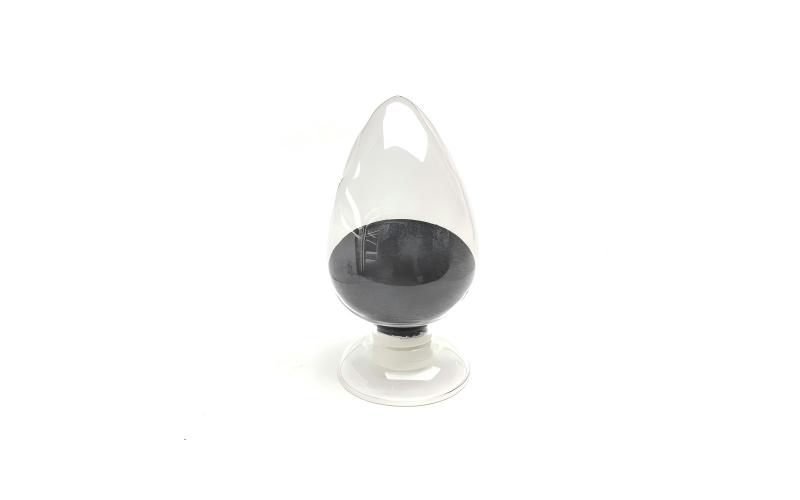
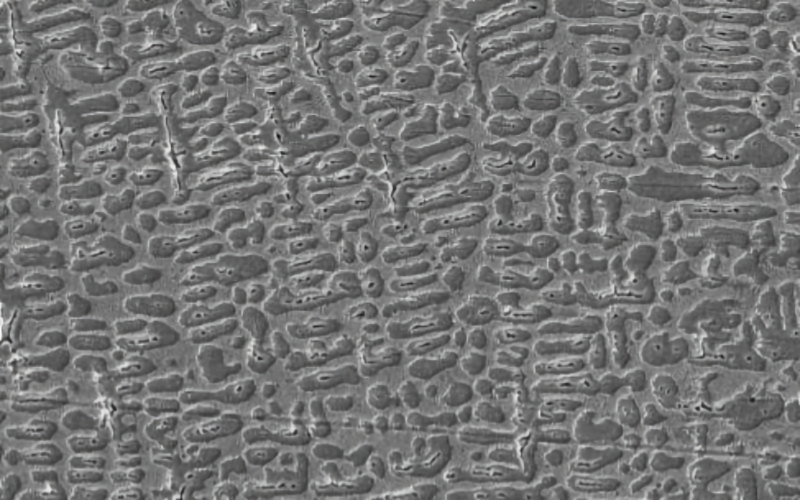

The Iron-Based Alloy Powder for Laser Cladding range is developed for laser cladding, laser metal deposition (LMD), and powder-fed directed energy deposition (DED). These iron-based laser cladding powders provide a cost-effective material solution for wear-resistant surface enhancement, dimensional restoration, industrial component repair, and remanufacturing.
Available grades can deliver hardness values of up to 70 HRC, depending on alloy composition and processing conditions. High-chromium iron-based formulations are available for applications requiring a combination of wear and corrosion resistance, while other grades can be selected for hydraulic equipment, engineering machinery, wear components, and hot-work die repair.
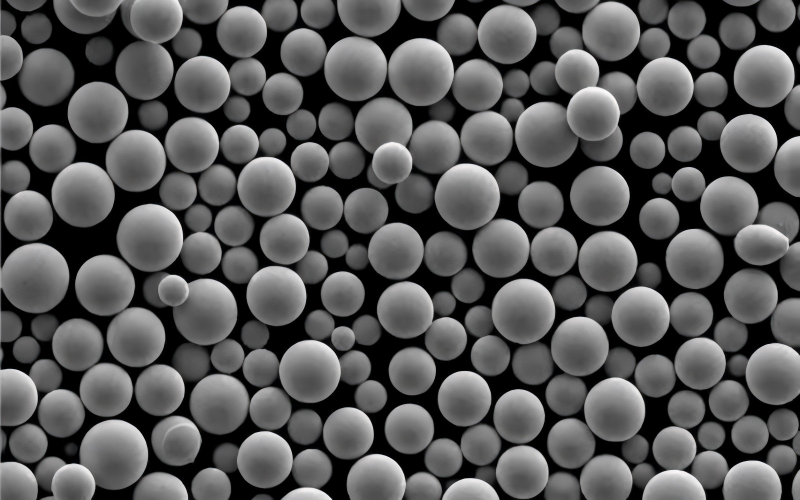
Manufactured using gas atomization, the powders feature spherical particle morphology, controlled particle-size distribution, and good flowability. These characteristics support stable powder feeding and consistent delivery to the melt pool during laser cladding and DED processing.
Under suitable process conditions, the powders can produce dense coatings with metallurgical bonding, stable multi-layer buildup, and a reduced cracking tendency. For customers seeking a gas-atomized iron-based alloy powder for wear-resistant laser cladding and die repair, multiple alloy grades and customized particle-size ranges are available according to the substrate, target hardness, coating thickness, and service environment.

Grade | Alloy composition (wt%) | hardness | Mature applications | |||||
C | Cr | Ni(Co) | Other | margin | ||||
Alloy Powder for External Cylindrical Cladding | 1701 | 0.37 | 17.4 | ≤1.5 | ≤4.2 | Fe | 58~61HRC(Low corrosion resistance) | Application: External cylindrical cladding for hydraulic supports and engineering machinery Feature: Low carbon content for enhanced corrosion resistance G Grade: Designed for high-speed laser cladding with circular beam spots |
1702 | 0.16 | 17.5 | 2.5 | ≤3.9 | Fe | 53~58HRC(Moderate corrosion resistance) | ||
1702* | 0.18 | 18.9 | 2.7 | ≤3.6 | Fe | 45~50HRC(Moderate corrosion resistance) | ||
1702*G | 0.18 | 18.9 | 2.7 | ≤3.6 | Fe | 40~45HRC(Moderate corrosion resistance) | ||
1802 | 0.24 | 17.4 | 2.5 | ≤2.8 | Fe | 50~55HRC(Moderate corrosion resistance) | ||
1802G | 0.24 | 17.4 | 2.5 | ≤2.8 | Fe | 50~55HRC(Moderate corrosion resistance) | ||
1802* | 0.17 | 19.3 | 2.6 | ≤3.0 | Fe | 40~45HRC(High corrosion resistance) | ||
1802*G | 0.17 | 19.3 | 2.6 | ≤3.0 | Fe | 40~50HRC(High corrosion resistance) | ||
1903 | 0.12 | 19.0 | 4.1 | ≤5.4 | Fe | 47~51HRC(High corrosion resistance) | ||
Alloy Powder for Internal Cylindrical Cladding | 1908H (G) | 0.18 | 19.3 | 7.8 | ≤4.7 | Fe | 280~350HB(High corrosion resistance | Application: Internal bore cladding for hydraulic supports and engineering machinery cylinders Feature: Designed for cylinder innerwall repair and surface enhancement G Grade: Suitable for high-speed laser cladding with circular beam spot |
1908(G) | 0.15 | 19.1 | 7.6 | ≤4.1 | Fe | 240~300HB(High corrosion resistance | ||
铝青铜 Cu85 | Al:11.8 | -- | -- | ≤2.4 | Cu | 180~230HB | ||

High-chromium stainless alloy powder with multi-element micro-alloying design
Enhanced corrosion resistance through low-carbon and high-nickel (cobalt) alloying
Wide hardness range: 180 HB–61 HRC for various surface enhancement applications
Excellent wear resistance, crack resistance, and coating stability
Suitable for hydraulic supports, hydraulic cylinders, and engineering machinery components
Reliable performance in demanding mining and industrial environments

Surface Performance Upgrade
Enhance wear resistance, corrosion resistance, and high-temperature performance of components operating under demanding conditions.
Dimensional Restoration & Remanufacturing
Recover worn or damaged surfaces of expensive components and restore original dimensions without replacing the entire part.
High-Wear Area Reinforcement
Strengthen localized areas subject to friction, impact, abrasion, or repeated mechanical loading.
Protective Coating for Harsh Environments
Apply advanced alloy coatings to components exposed to chemicals, moisture, extreme temperatures, and abrasive materials.
Precision Surface Modification
Achieve controlled coating thickness, low heat input, and minimal distortion for high-value precision components.