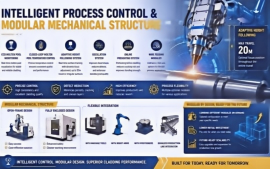
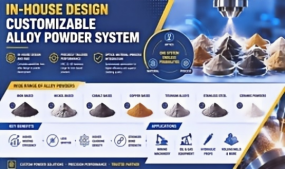
We possess complete in-house capabilities for the design and development of alloy powders, rather than simply outsourcing off-the-shelf products. Our mature powder portfolio covers iron-based, nickel-based, copper-based, cobalt-based, titanium alloys, stainless steels, and ceramic powders, meeting diverse application requirements such as wear resistance, corrosion resistance, and high-temperature performance.
Process Category | Morphology of Alloy Powders | Characteristics of Alloy Powders | Process Application Range | Available Specifications |
| Gas Atomization + Air Cooling |
| 1)Spherical or near spherical powders; 2) Low hydrogen and oxygen content; 3)Smooth powder feeding, compatible with any feeder; 4)High composition consistency, especially suitable for laser manufacturing of corrosion resistant coatings; 5)Mainstream manufacturing process for laser cladding powders | ·Powders for hydraulic supports & construction machinery ·High hardness wear resistant powders · Powders for hot work dies ·Nickel based alloy powders ·Copper based alloy powders | 100–270 mesh laser cladding equipment with a rectangular spot 300–500 mesh(25–48 µm): Suitable for laser cladding equipment with a circular spot 100–270 mesh laser cladding equipment with a rectangular spot 300–500 mesh(25–48 µm): Suitable for laser cladding equipment with a circular spot |
Sintering & Crushing | 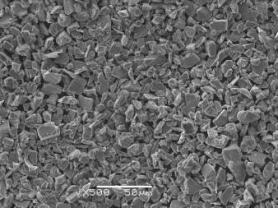 | 1) Non spherical powders; 2)Need to be mixed with (near)spherical powders before feeding and cladding; 3)Suitable for mass production of refractory metals and cemented carbide powders. | ·High hardness wear resistant powders · Powders for hot work dies ·Nickel based alloy powders | |
| Mixing | 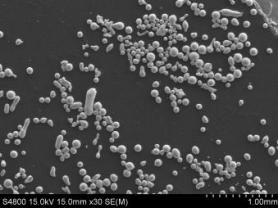 | 1)Spherical, near spherical or non spherical mixed powders; 2)No melting loss during powder production; 3)Especially suitable for manufacturing of refractory metals or materials with large differences in melting point or density; 4)Easy composition adjustment, economical and practical.。 | ·High hardness wear resistant powders · Powders for hot work dies ·Nickel based alloy powders ·Copper based alloy powders |
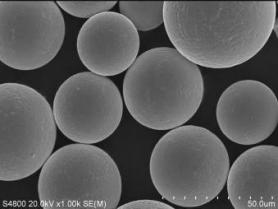
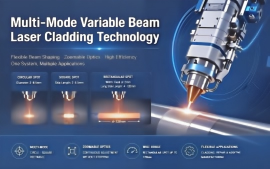
Taking iron-based powders as an example, we can precisely tune the alloy composition and microstructure across a wide hardness range of HRC 25–65 according to customer specifications. The particle size distribution, flowability, and sphericity of each powder are simultaneously optimized with the energy distribution of our circular, square, or rectangular spots, achieving an integrated "optics–material–process" matching.
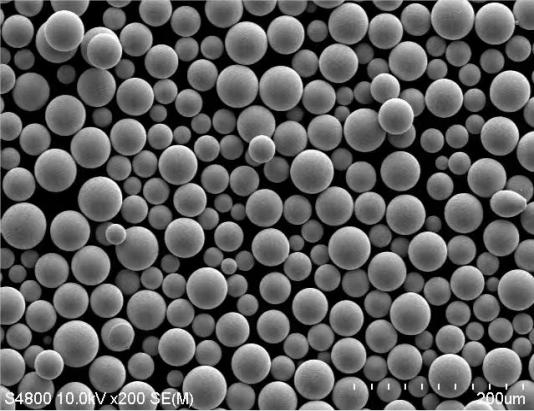 | 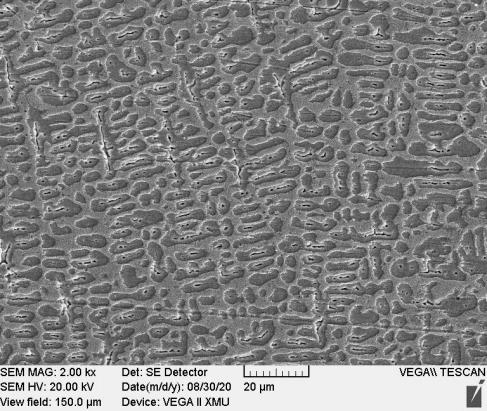 |
| Morphology of Alloy Powder | Microstructure of the Cladding Layer |
This optics-powder synergistic development approach delivers higher powder melting efficiency, less spatter, and improved density and bond strength of the cladding layer, providing customers with truly customized solutions from material to process.
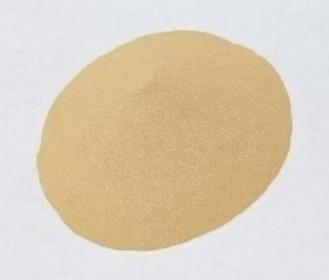 | 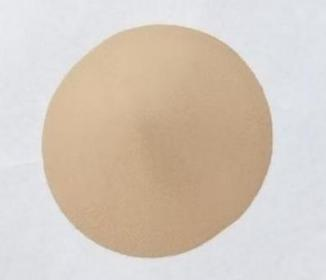 | 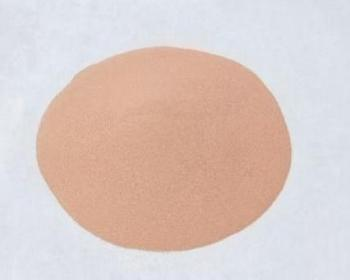 |
| Aluminum bronze powders | Tin bronze powders | Mixed type copper powders |