How Laser Cladding Improves Industrial Repair and Remanufacturing?
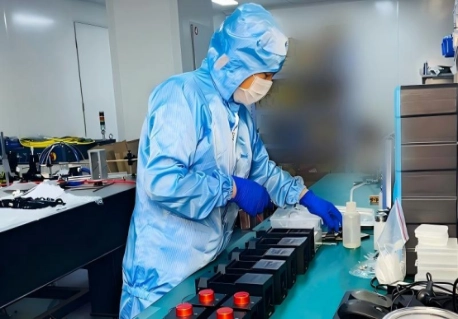
Industrial repair is no longer limited to replacing worn parts. For maintenance teams, the bigger challenge is deciding whether a damaged shaft, roll, valve seat, or hydraulic rod can be restored without affecting its original strength and accuracy. The answer depends on the remaining wall thickness, wear mechanism, coating alloy compatibility, target layer thickness, allowable heat input, distortion tolerance, and machining allowance. When these conditions are suitable, laser cladding can restore the damaged surface while preserving more of the original component. This makes it useful for repair shops, OEM service teams, and manufacturers working with high-value industrial equipment.
Laser cladding uses a focused laser beam to melt alloy powder or wire together with a thin layer of the substrate. As the molten pool solidifies, it forms a metallurgically bonded coating rather than a layer that simply sits on the surface. The repaired area can then be machined back to the required dimension. This process is particularly useful when the base component is still structurally sound but has suffered from local wear, corrosion, erosion, or impact damage. It can reduce material waste and shorten replacement lead times, while also supporting cleaner surface-repair processes.
Why Industrial Repair Needs a Better Surface Process
Repair engineers face a basic yet costly issue. Many machine parts break down on the outside first. The inside metal might remain perfectly tough. However, the outer skin takes damage from friction, rust, harsh fluids, heavy hits, or extreme heat. Swapping out the full part wastes valuable hours and good metal. A smarter repair method needs to fix that outer skin. It must do this without hurting the solid base underneath.
The Limits of Conventional Repair
Older repair styles still serve a purpose. However, they usually come with compromises. Regular arc welding often pushes too much heat into the metal. Thermal spray coatings generally rely primarily on mechanical and localized metallurgical bonding rather than the continuous metallurgical bond typical of laser cladding. Depending on the application, this may influence coating thickness, impact resistance, repair depth and substrate preparation requirements. Hard chrome plating is subject to increasingly stringent environmental and occupational controls in many markets. Furthermore, it might not build up enough thickness to fix deeply worn areas.
Not every worn part needs laser cladding. Low-value parts may still be replaced. It applies highly focused heat. It controls exactly how much material goes down. It also keeps the melted area quite small. The deposited layer does not just sit on top. It literally melts into the base part. This action forms a true metallurgical bond. That strong connection is the main reason companies choose laser cladding. They trust it for parts that handle huge weights, rough dirt, harsh chemicals, or constant bending.
Material Features That Make Laser Cladding Useful
Material choice decides whether the repaired part will survive in real service. In laser cladding, the coating material is selected according to the base metal, wear mode, temperature, corrosion medium, and finishing allowance. That makes the process flexible for both one-off repair and repeat production.
Before choosing a coating alloy, engineers should examine how the component actually fails. Abrasive wear may require a hard iron-based or carbide-reinforced coating, while corrosion and high-temperature exposure may call for a nickel-based or cobalt-based alloy. The coating must also be compatible with the substrate and thick enough to allow final machining without creating excessive residual stress or distortion.
Common Material Types
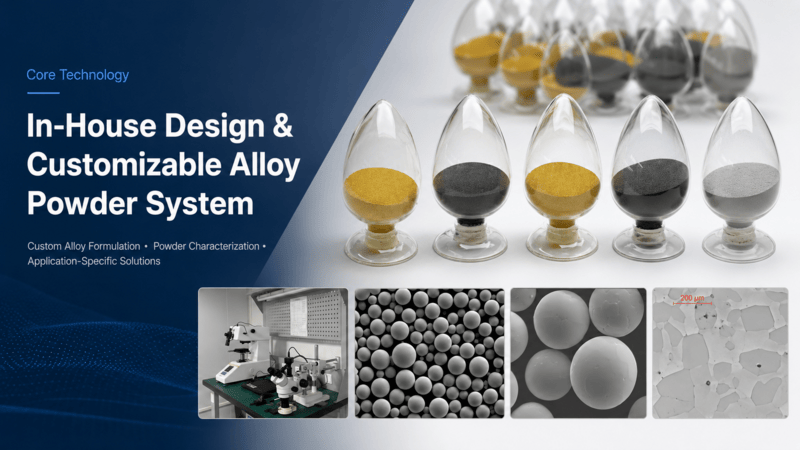
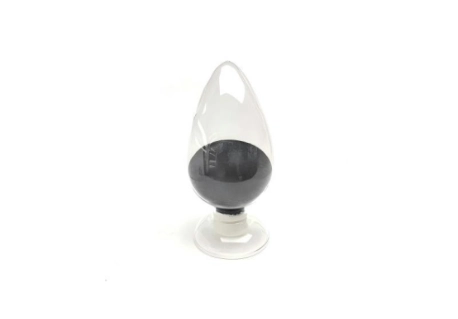
Different alloy powders or wires can be used depending on the job. At LZ Optical, we provide laser cladding alloy powder options for wear resistance, corrosion protection, and surface performance improvement. Common material directions include:
· Iron-based alloys for cost-sensitive wear-resistant repair
· Nickel-based alloys for corrosion, heat, and chemical attack
· Cobalt-based alloys for hot wear and valve sealing surfaces
· Copper-based alloys for special friction and anti-seizure needs
· Carbide-reinforced coatings for severe abrasion
· Stainless steel powders for balanced corrosion and toughness
The material does not work alone. Beam shape, powder flow, travel speed, overlap rate, and cooling all affect the final layer. A good laser metal cladding head must deliver stable energy and stable material feeding, because a poor powder stream can create porosity, weak bonding, or uneven coating thickness.
Core Advantages of a Laser Cladding System
For plant managers, the real question is not whether the technology sounds advanced. The real question is whether it reduces repair risk. A laser cladding system can improve repair when the component is valuable, the damaged area is local, and the coating must resist wear or corrosion for a long time.
Strong Bonding With Lower Heat Input
Laser cladding forms a metallurgical bond between the deposited alloy and the substrate. Compared with many traditional surface methods, it also limits heat input. That matters for long shafts, hydraulic rods, valve parts, rolls, and precision surfaces, where bending or distortion can turn a repair into scrap.
Key benefits include:
· Lower heat-affected zone
· Reduced distortion after repair
· Strong coating adhesion
· Low dilution when process parameters are well controlled
· Better control over coating thickness
· Local repair without rebuilding the full surface
· Dense coating structure with improved hardness or corrosion resistance
Our engineering team at LZ Optical studies the workpiece geometry, substrate material, coating target, hardness need, and automation condition before suggesting a configuration. This helps match the process to the real repair task instead of treating every worn part the same way.
Product Categories for Industrial Repair
A complete laser cladding solution is more than one machine. It usually includes laser power, motion control, a processing head, powder or wire feeding, cooling, monitoring, and process development. For industrial users, product selection should start with the part shape and repair area.
External Surface Systems
External surface cladding is widely used on shafts, rollers, hydraulic rods, cylinders, mill rolls, and pipes. These parts often need wear-resistant or corrosion-resistant layers over large areas. LZ Optical offers an external surface coaxial powder feeding cladding head for wide-area coating, thick protective layers, and remanufacturing work.
This type of head can support high powder use efficiency, wide beam processing, and stable multi-layer deposition. For large external surfaces, fewer overlap zones can also mean a more consistent coating and less finishing work.
Internal Bore and Deep-Hole Cladding
Internal surfaces are harder to repair. The head must enter a narrow space, keep the powder stream stable, and hold the laser spot at the correct position. Bore repair is valuable for hydraulic cylinders, sleeves, tubes, pressure parts, and internal sealing surfaces.
Internal laser cladding can be used when the repair area is inside the part and ordinary welding tools cannot reach it cleanly. It is also useful when the base component is expensive, large, or difficult to replace.
Robotic and Automated Cladding
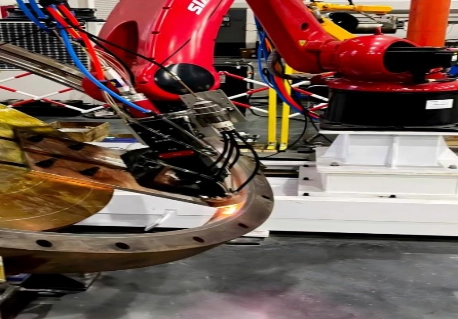
Automation is one of the strongest recent trends in repair. A robotic laser cladding system can handle complex paths, irregular surfaces, and large parts with better repeatability than manual operation. Robotic laser cladding is especially useful for repair shops that handle many part shapes, not just simple round shafts.
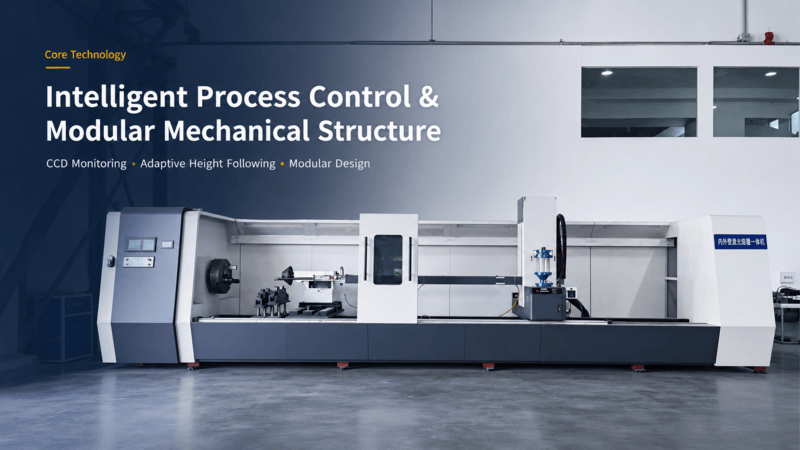
The system can be paired with positioners, rotary tables, monitoring, height following, and different cladding heads. This is important for modern remanufacturing, where customers expect shorter lead times and documented coating quality.
Where Laser Cladding Improves Industrial Repair Most
Not every worn part needs laser cladding. Low-value parts may still be replaced. But for expensive components, parts with long procurement cycles, or surfaces exposed to severe service, laser cladding can offer a better repair path.
Main Application Industries
Laser cladding is now used across many heavy and high-value industries. The most common areas include:
· Oil and gas equipment: valves, pump parts, pipes, plungers, drilling tools
· Mining machinery: hydraulic support columns, cutting picks, sleeves, shafts
· Power generation: rotors, valve parts, wear rings, sealing surfaces
· Steel and metallurgy: mill rolls, guide rollers, transmission shafts
· Hydraulic systems: piston rods, cylinder barrels, plungers, sleeves
· Heavy machinery: large shafts, crankshafts, bearing seats, gear-related parts
· Industrial valves: ball surfaces, seats, stems, sealing bands
· Marine and offshore equipment: corrosion-prone rotating and tubular parts
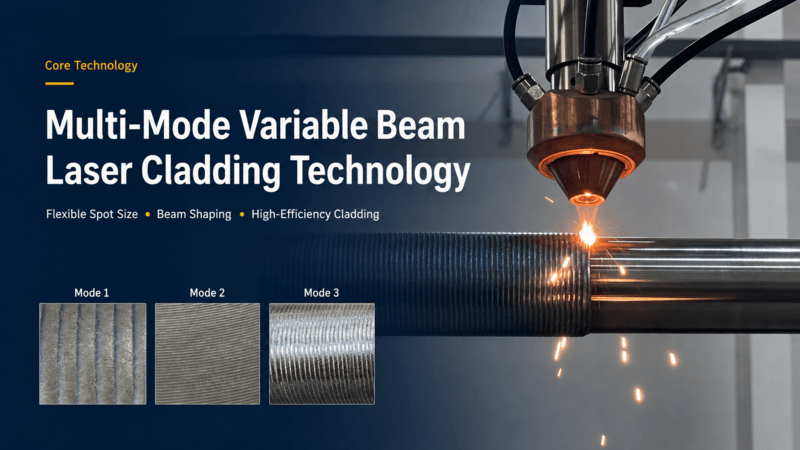
LZ Optical designs our laser cladding heads for different surface shapes, feeding methods, and beam profiles, including circular, square, and rectangular spots. We also support powder feeding, wire feeding, internal bore cladding, external surface repair, and custom surface engineering.
How Recent Industry Trends Support Laser Cladding
Repair and remanufacturing are becoming part of the production strategy for many manufacturers. Instead of discarding a worn component, companies are assessing whether the original substrate is still usable and whether the damaged area can be rebuilt with a suitable alloy. This approach is especially valuable for large shafts, hydraulic cylinders, mill rolls, valves, and other parts that are expensive to replace or difficult to source quickly.
Laser metal deposition and directed energy deposition support this change by adding material only where restoration is required. At LZ Optical, we provide complete solutions that combine laser cladding equipment, processing heads, powder feeders, and alloy powders. This allows the system configuration to be matched with the workpiece geometry, repair area, coating material, and required layer thickness.
For large external surfaces, our external surface coaxial powder feeding cladding head uses a wide-beam optical design for shafts, hydraulic rods, rolls, mining support columns, and pipes. It supports powder utilization of up to 98%, single-layer cladding thicknesses exceeding 4 mm, and stable multi-layer deposition. A wider beam can also reduce the number of scan tracks and overlap zones during large-area repair.
Internal surfaces require a different solution. LZ Optical’s inner surface laser cladding equipment is designed for deep bores, hydraulic cylinders, sleeves, pipes, valve bodies, and other cylindrical components. It supports 3-30 kW laser power and can be configured with circular, square, or rectangular spots. Optional CCD molten pool monitoring, closed-loop temperature control, adaptive height following, oscillation, and online preheating help maintain a stable process on long or irregular workpieces.
Automation is another important development. Our robotic laser cladding system can be integrated with machine tools, robotic arms, and positioners for large or complex components. The overall system can be engineered for workpieces up to 20 meters in length, making it suitable for repeatable repair and remanufacturing work in mining, power generation, oil and gas, and heavy machinery.
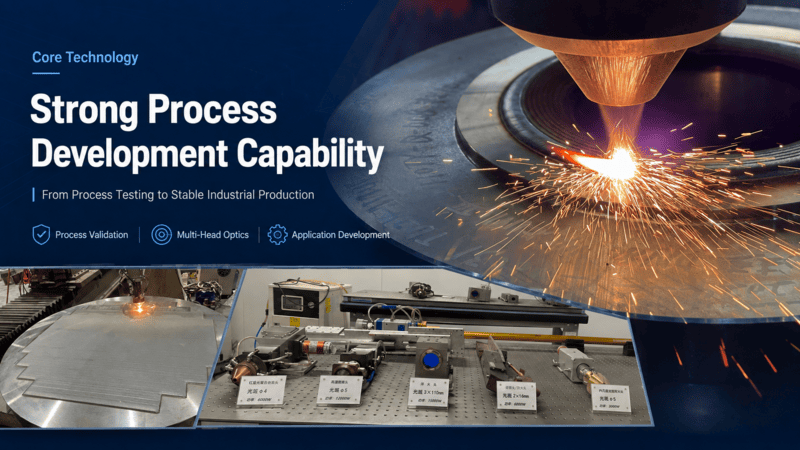
Process control remains central to repair quality. Beam shape, powder delivery, working distance, temperature, and motion path all affect bonding, dilution, distortion, and final machining requirements. This is why LZ Optical also develops custom laser cladding solutions based on the actual component and its service conditions, rather than selecting equipment by laser power alone.
How to Choose the Right System
A buyer should not choose a laser cladding system by laser power alone. Higher power can increase deposition rate, but it does not automatically create better repair quality. The right system depends on the component, coating target, and production plan.
Before selecting equipment, check:
· Workpiece size, weight, and access area
· External surface or internal bore requirement
· Base material and coating material
· Required hardness, corrosion resistance, and thickness
· Powder or wire feeding preference
· Manual, CNC, or robotic motion
· Need for monitoring and height following
· Post-machining allowance
· Expected batch size and repair cycle time
For users who need a full process route, our application experience covers mining equipment repair, industrial valves, oil and gas parts, and other demanding industrial fields. The best result comes from matching equipment design with field conditions, not from choosing a generic machine.
Conclusion
So, does a laser cladding system improve industrial repair? In many high-value applications, yes. It can rebuild worn surfaces, extend component life, reduce replacement cost, and add wear or corrosion resistance where the part needs it most. Its value is strongest when distortion control, bonding strength, coating thickness, and repeatability matter. As industrial repair moves toward cleaner, more automated, and more local remanufacturing, laser cladding gives maintenance teams a practical way to recover parts that might otherwise be scrapped. For shafts, rods, valves, rolls, cylinders, and large machinery parts, it is not just a repair method. It is a surface engineering strategy.
FAQs
Q: Does a laser cladding system work for local repair?
A: Yes. It rebuilds damaged areas without replacing the whole component.
Q: Is robotic laser cladding suitable for large shafts?
A: Yes. Robotic laser cladding supports repeatable paths on long, heavy, or irregular parts.
Q: What factors affect laser cladding quality?
A: Laser power, coating material, powder flow, heat input, travel speed, and substrate preparation all affect the final result.
Recent Articles