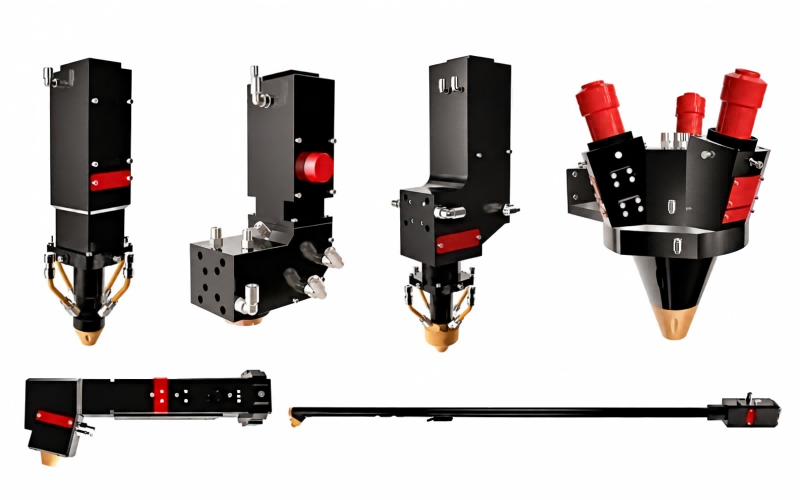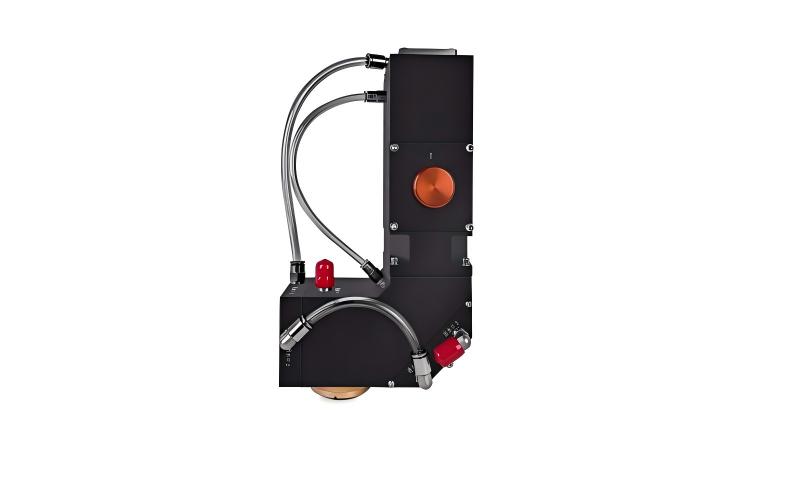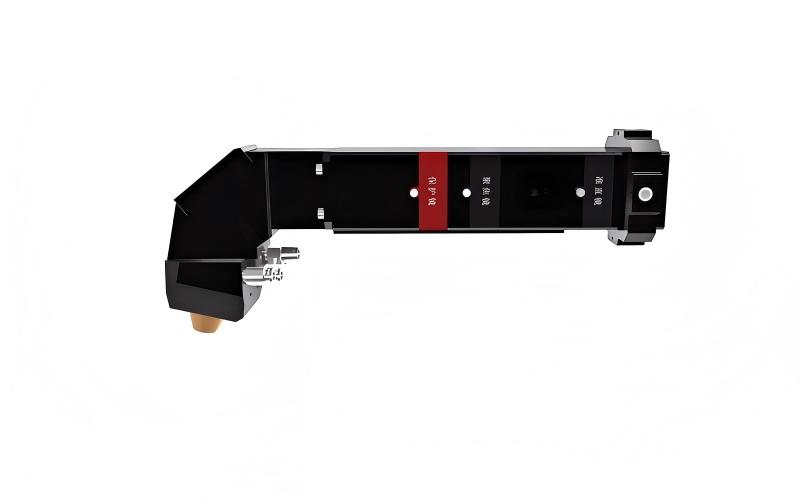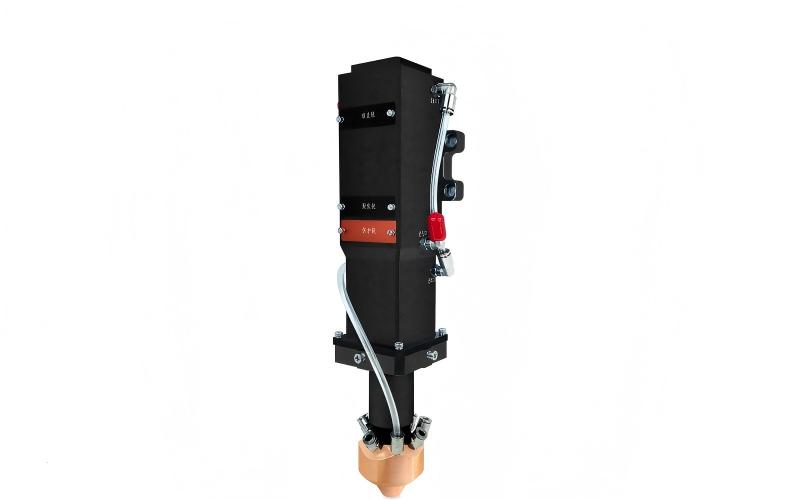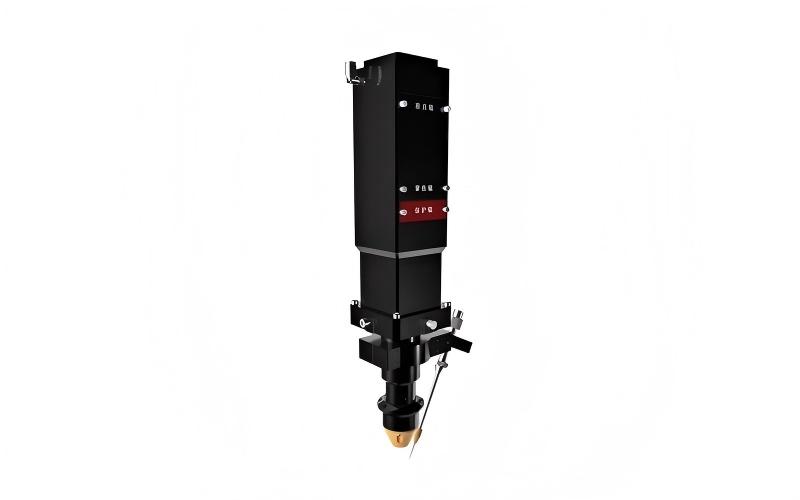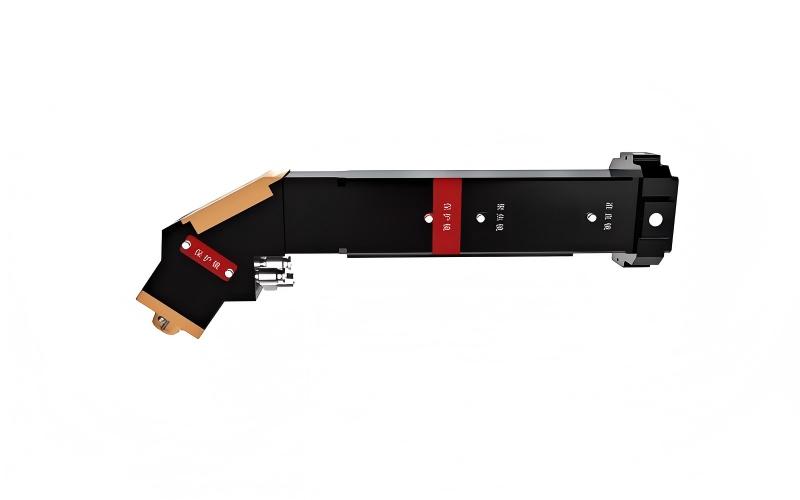
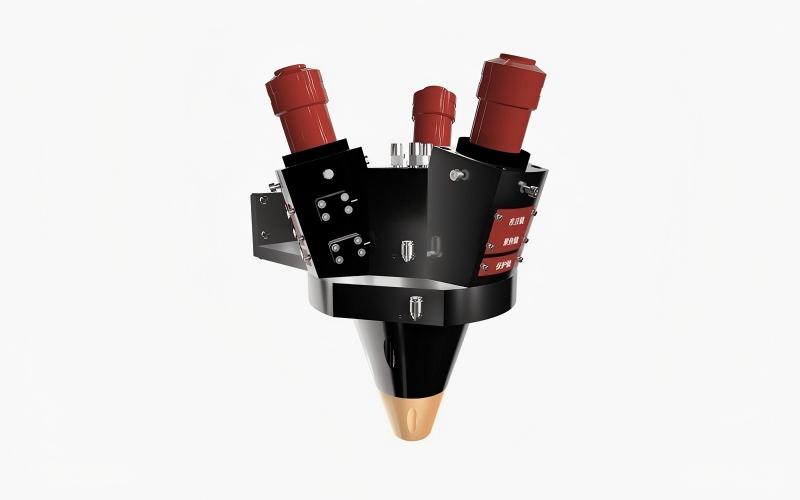
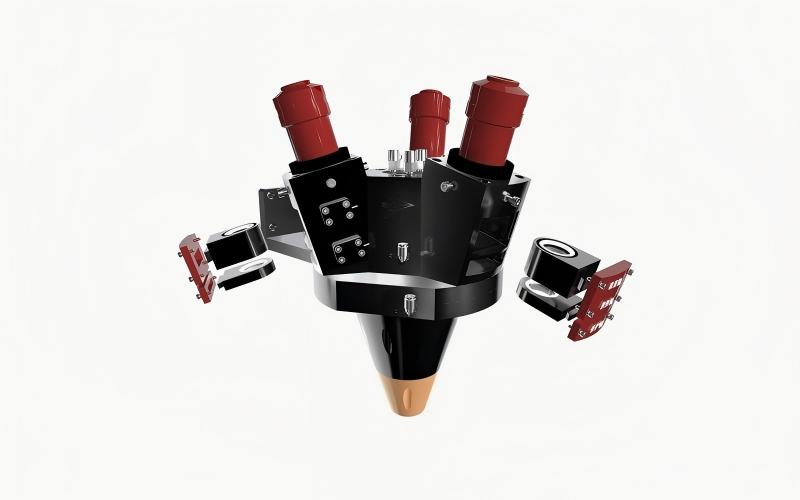
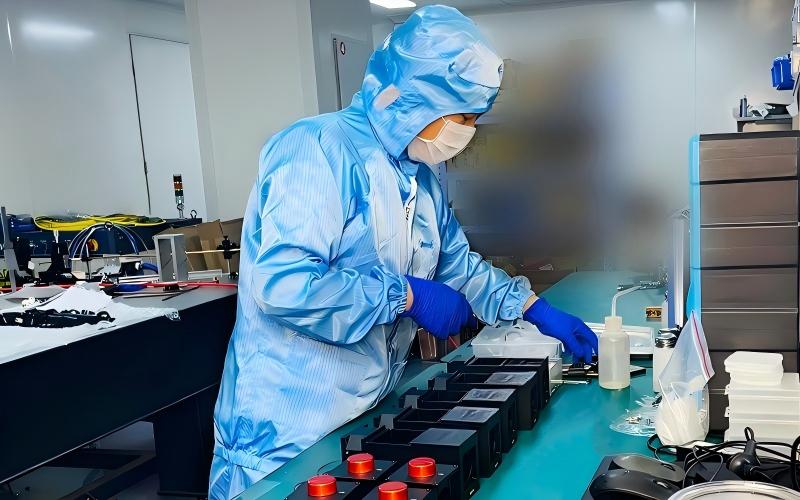

The Central Wire Feeding Laser Cladding Head is engineered for high-quality wire-fed laser cladding and supports wire diameters ranging from 1.0 to 1.8 mm. Three laser beams converge symmetrically at the wire center, providing balanced energy input, stable wire melting, and consistent deposition performance.
Designed for external surfaces and flat workpieces, the head offers excellent accessibility and process flexibility for a wide range of industrial components. Its central wire feeding configuration enables virtually 100% wire utilization and is compatible with standard welding wires, helping reduce consumable costs and simplify material sourcing.
With strong metallurgical bonding, low heat input, minimal substrate distortion, and dense, high-integrity deposits, the system is suitable for both ferrous and non-ferrous alloys. As a laser cladding head for external surface repair and component remanufacturing, it is ideal for dimensional restoration, wear protection, surface enhancement, and extending the service life of high-value components.

|
|
| |||
| Beam Quality | Process Monitoring | Material Compatibility | |||
Optimized optical design provides stable beam delivery and uniform energy distribution. The beam profile and spot size are matched to the head design and target application. | Optional monitoring functions can include lens temperature monitoring, molten pool observation, process temperature sensing, and real-time process feedback to improve operating stability and process consistency. | Compatible with a wide range of metallic materials, including iron-based, nickel-based, cobalt-based, copper-based, and titanium alloys, depending on the head setup, laser parameters, and feeding method. | |||
|
|
| |||
| Modular Design | Thermal Management & Protection | Industrial Integration | |||
The optical system, cooling structure, monitoring components, and material delivery modules are designed for convenient assembly, maintenance, and replacement. Modular construction also makes customized configurations easier for different industrial applications. | Efficient water cooling helps maintain stable operating temperatures during continuous processing. Protective design features can include dust resistance, spatter protection, sealing structures, and optional thermal monitoring for reliable operation. | Compatible with CNC machines, robots, positioners, and automated laser systems. Optical interfaces, working distance, beam setup, and wire feeding can be tailored to the application. |





Model | Performance Parameters |
Power Options | 6 kW |
Fiber Interface | QBH |
Spot Size | ~ Φ5 |
Outer Dimension(mm) | 425×270×270 |
Working Distance(mm) | ~20 |
Operating Wavelength(nm) | 1080 |
Cooling Type | Water cooling |
Water Quality Requirements | Pure water |

Additive manufacturing
Tool steel repair
Mold rebuilding
Thick-wall deposition
Aerospace components
High-strength metal deposition

Q1: How does the three-beam central wire feeding design improve cladding quality compared to conventional wire feeding systems?
A1: Unlike conventional off-axis wire feeding systems, this head features three laser beams converging precisely at the wire center, ensuring
uniform energy distribution and exceptionally stable deposition performance. This design reduces spatter, improves wetting, and delivers
consistent layer quality. It supports wire diameters from 1.0 mm to 1.8 mm, making it highly versatile for external surface and flat-surface
cladding applications.
Q2: What is the material utilization rate of this central wire feeding cladding head, and how does it compare to powder-based systems?
A2: The central wire-feeding design can achieve very high material utilization, approaching 100% under optimized process conditions.