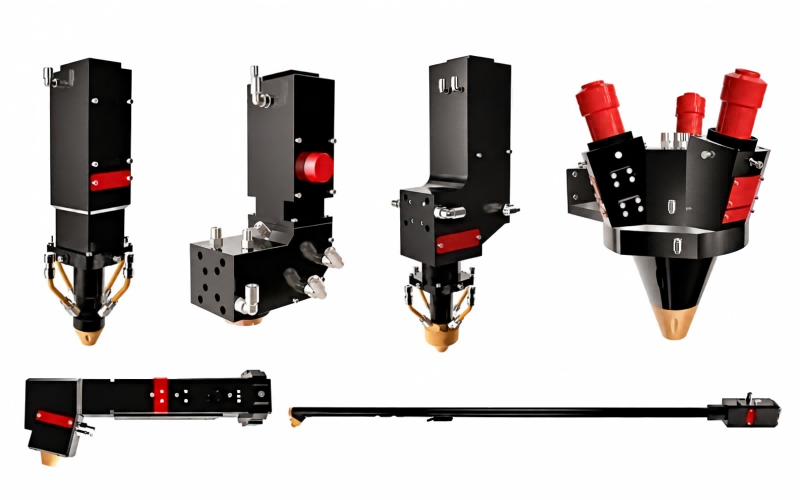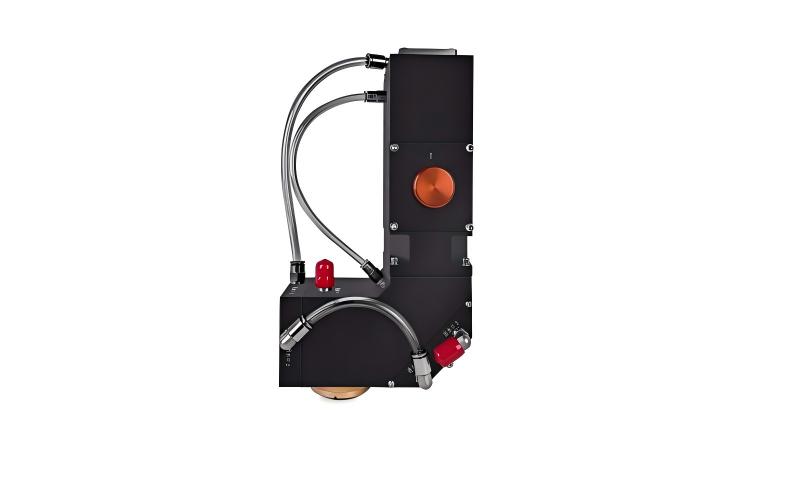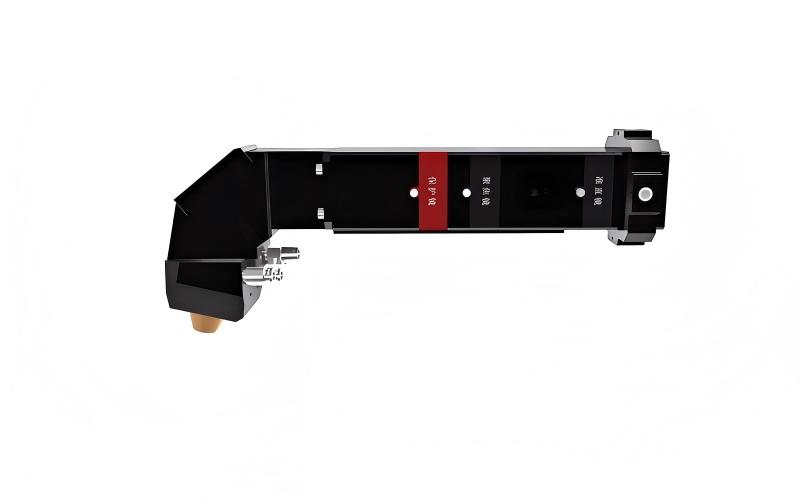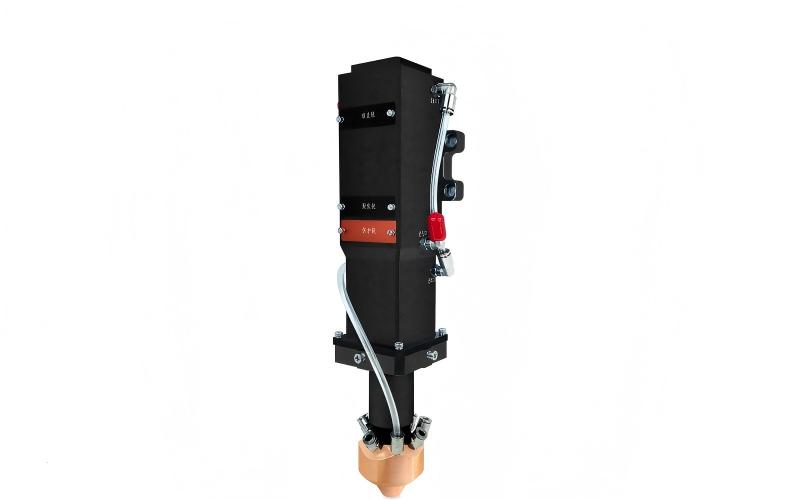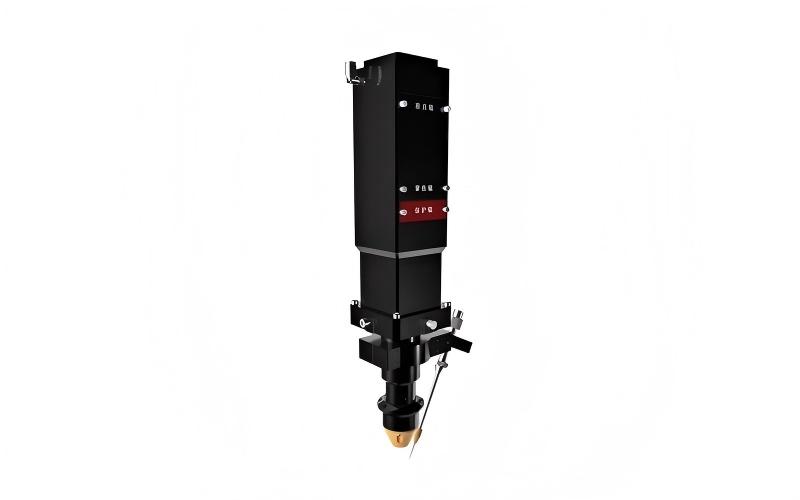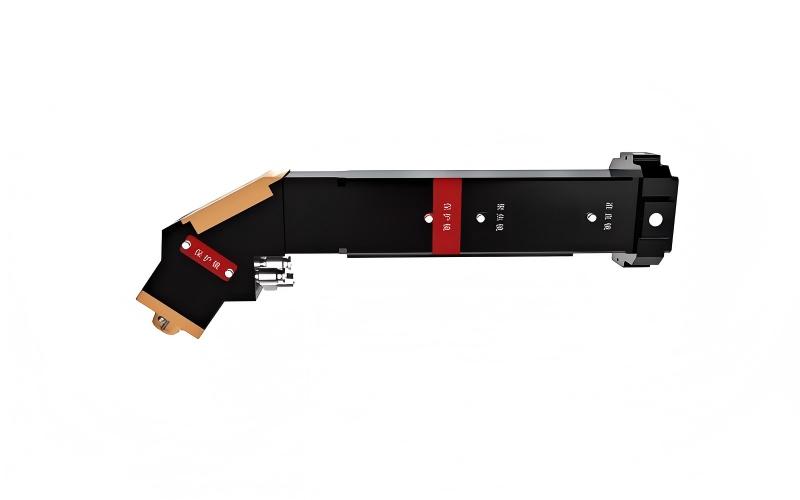
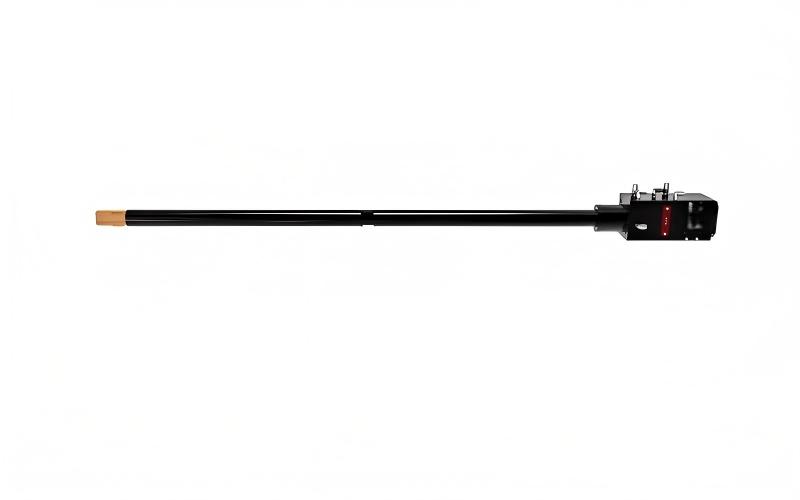
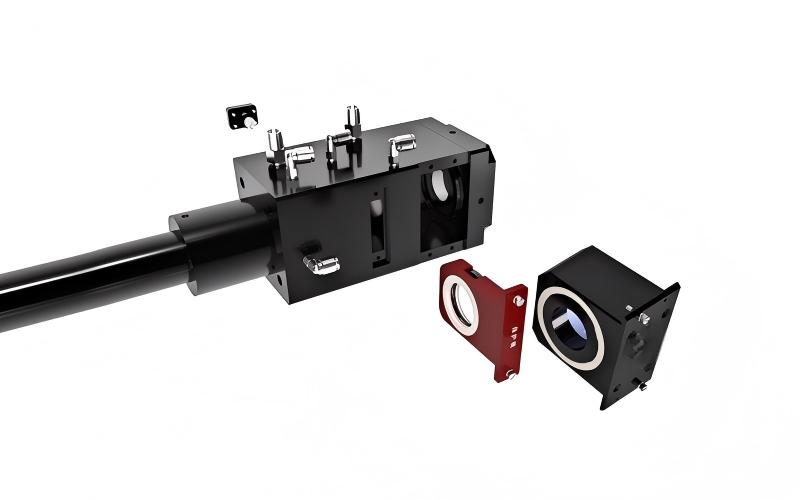
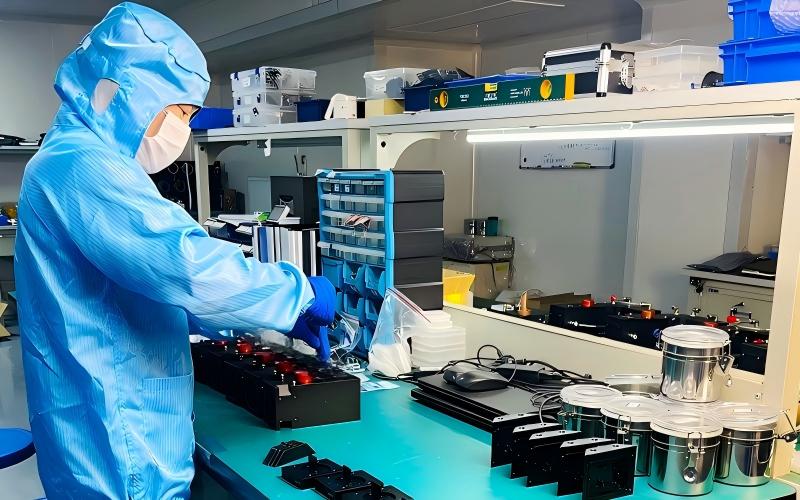

The Laser Hardening Head for Internal Surfaces is engineered for high-precision internal bore laser hardening of cylindrical inner surfaces and other difficult-to-access internal geometries. Its adjustable wide-beam optical design provides a beam width from 4 to 30 mm, allowing the treatment width to be matched to the bore size, hardening path, and target area. The head supports both full-surface treatment and selective laser hardening of localized wear zones.
By concentrating laser energy within a controlled treatment area, the head limits thermal influence on the surrounding material and supports low-distortion processing. For suitable materials and validated process conditions, external water or oil quenching media are not required. Depending on the substrate and final performance specification, a separate tempering step may also be unnecessary. The controlled heat input helps preserve dimensional accuracy and surface finish, reducing subsequent machining for appropriate applications.
Designed for wear-resistant surface strengthening, localized repair, and service-life extension, this adjustable-beam laser hardening head for internal bores provides a flexible solution for OEMs, repair centers, and system integrators. It is particularly suited to internal diameter (ID) hardening applications where precise treatment-area control, repeatable hardening quality, and component integrity are critical.

|
|
| |||
| Beam Shaping | Temperature Control | Dimensional Stability | |||
Optimized optical design enables stable and uniform energy distribution for laser hardening applications. Circular, square, rectangular, or customized beam profiles can be configured according to the workpiece geometry and required hardened area. | Optional process temperature monitoring and closed-loop control can be added to improve heating consistency and reduce the risk of overheating. Process parameters can be adjusted according to material properties, hardening depth, and surface requirements. | Localized laser heating reduces excess heat input and helps minimize thermal distortion compared with conventional hardening. Dimensional stability depends on the material, geometry, process parameters, and initial condition. | |||
|
|
| |||
Modular Optical Design | Thermal Management & Protection | Industrial Integration | |||
The optical system, cooling unit, protective window, and beam-shaping modules are designed for easy maintenance and adjustment. Optical modules can be tailored for different hardening widths and workpiece shapes. | Efficient water cooling helps maintain stable operating temperatures during continuous processing. Protective design features can include dust resistance, spatter protection, sealing structures, and optional thermal monitoring for reliable operation. | Designed for integration with CNC machines, robotic systems, positioners, and automated hardening equipment. Working distance, beam size, optical interface, and motion configuration can be customized according to the application. |





Model | Performance Parameters |
Power Options | 6 kW |
Fiber Interface | QBH |
Spot Size | 2×20 |
Outer Dimension(mm) | 1300×80×80 |
Working Distance(mm) | ~18 |
Operating Wavelength(nm) | 1080 |
Cooling Type | Water cooling |
Water Quality Requirements | Pure water |

Internal bores of hydraulic cylinders requiring increased wear resistance and longer service life.
Inner surfaces of bearing housings, bushings, and sleeves for improved hardness and fatigue strength.
Valve bores, pump housings, and mechanical cavities requiring localized laser hardening.
Internal sealing surfaces of oil & gas, chemical, and power equipment to reduce wear and extend maintenance intervals.
Precision inner diameters of molds, dies, and tooling components requiring minimal distortion and high dimensional accuracy.
Tubular and hollow components requiring selective internal surface hardening with low heat input and excellent process stability.

Q1: Can this laser hardening head perform both full-surface and selective area hardening on internal bores?
A1: Yes. The wide-beam configuration allows the beam width to be freely adjusted from 4 mm to 30 mm, enabling both full-surface hardening
and selective area hardening on internal cylindrical surfaces. This flexibility is ideal for components requiring targeted wear protection —
such as hydraulic cylinder barrels, pipe interiors, and precision bores — without hardening unnecessary areas.
Q2: Why does laser hardening with this head require no water cooling, oil quenching, or post-hardening tempering?
A2: Unlike conventional induction or flame hardening, this head delivers highly concentrated laser energy with a minimal heat-affected zone
(HAZ) . The rapid self-quenching effect of the surrounding base material eliminates the need for external quenching media or water cooling.
No tempering treatment is required after hardening, significantly simplifying production while preserving the component's original dimensions,
surface roughness, and overall mechanical properties.