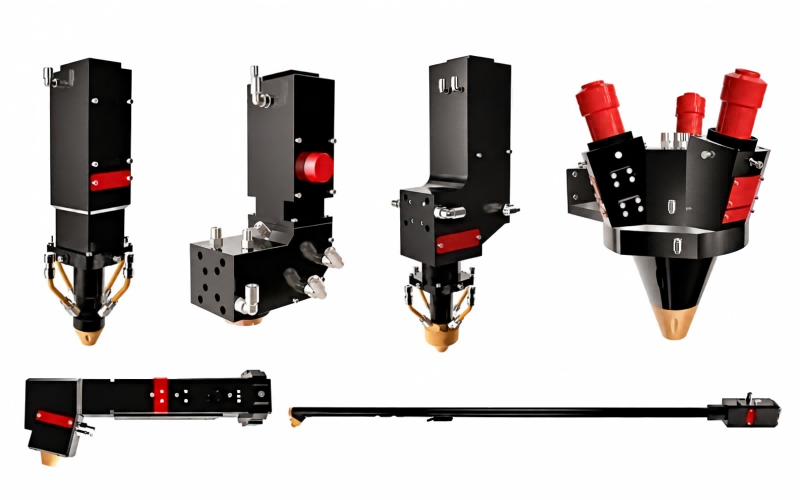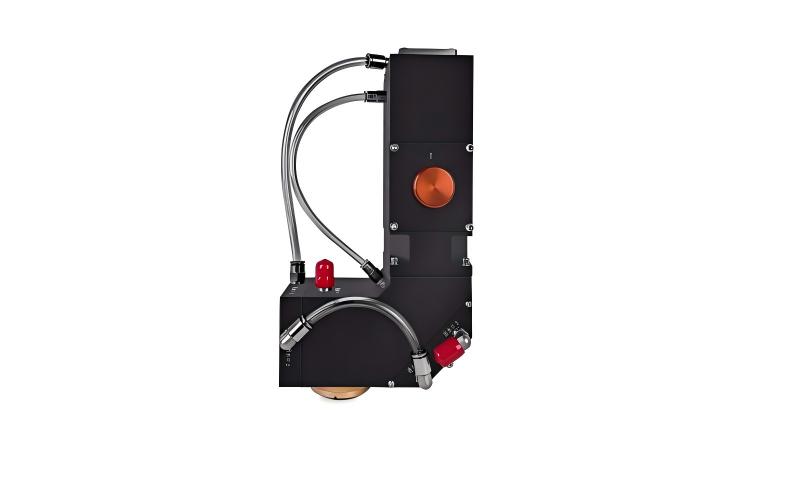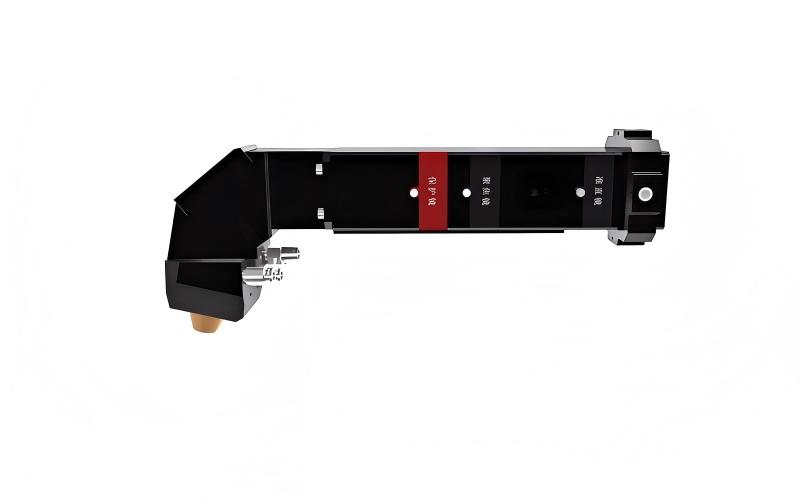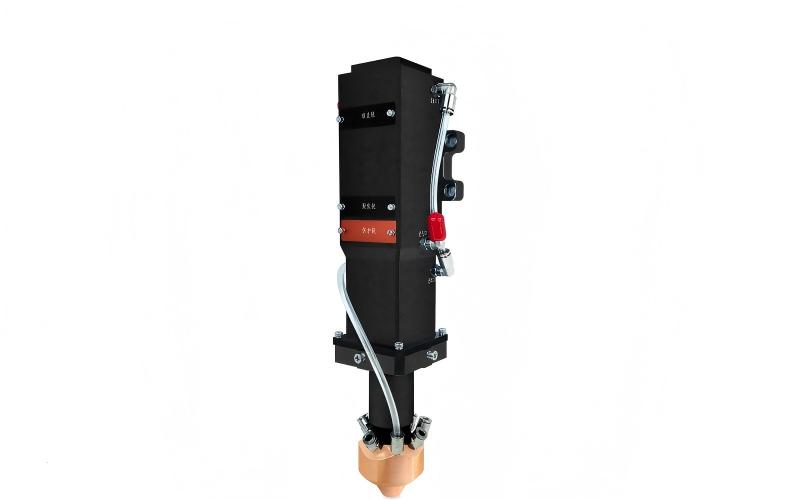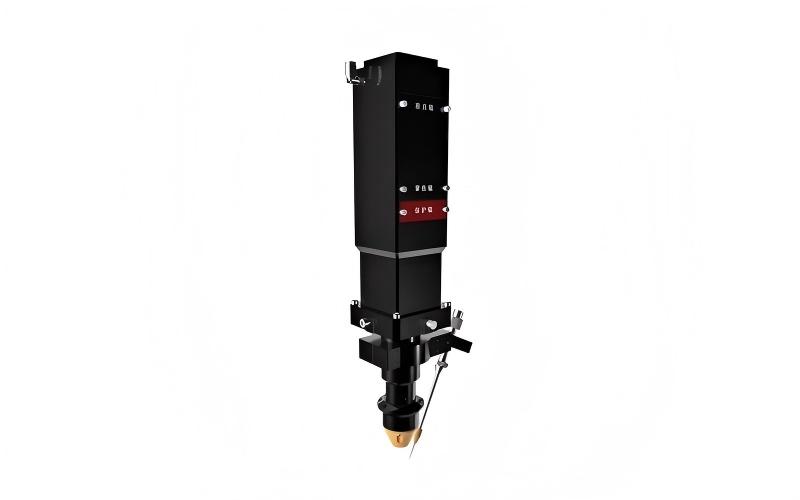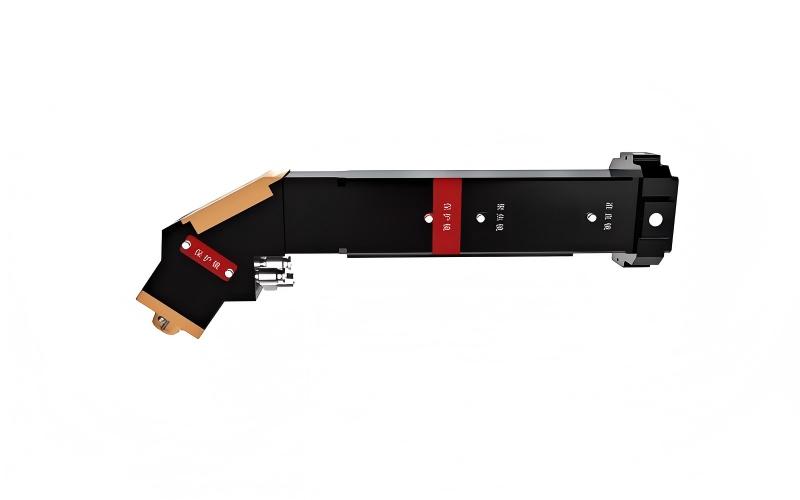
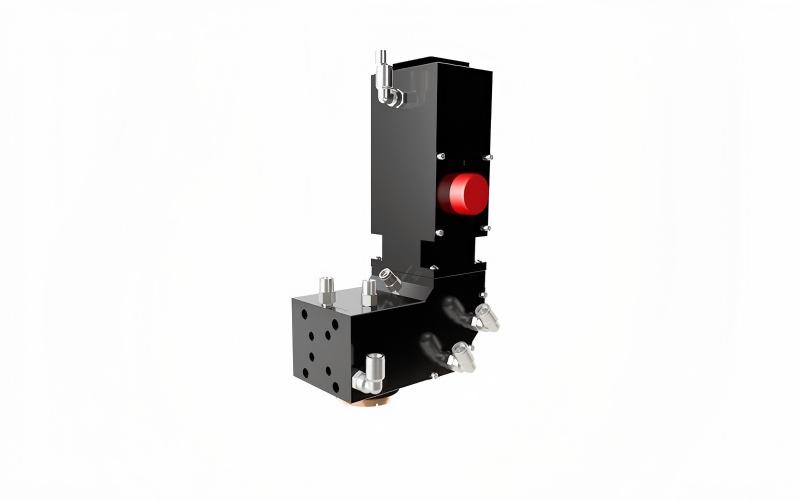
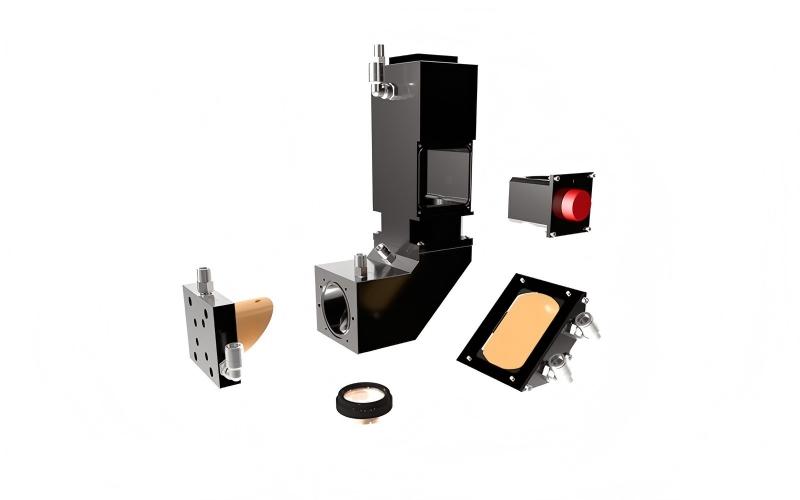
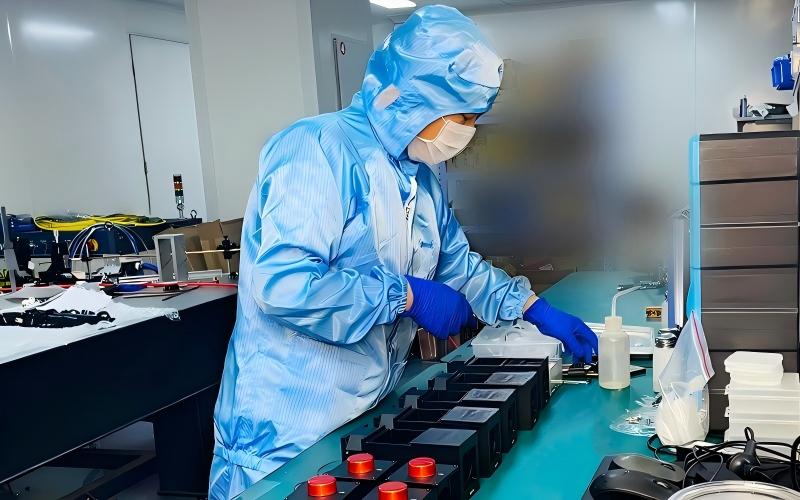

The Laser Hardening Head for Surface Treatment is engineered for high-efficiency laser surface hardening of large-diameter shafts, pipes, tubes, and flat metal components. Its configurable wide-beam optical design supports treatment widths from 4 to 200 mm, allowing the beam width to be matched to the component geometry, scanning strategy, and target treatment area. The head is suitable for both full-surface treatment and selective laser hardening of localized wear zones.
The process concentrates laser energy within a controlled surface layer and uses rapid self-quenching through heat conduction into the substrate. For suitable materials and process conditions, external water or oil quenching media are generally not required, simplifying operation and reducing the handling and maintenance associated with conventional liquid-quenching processes. Depending on the substrate material, initial microstructure, workpiece geometry, and process parameters, hardening depths of up to 3 mm can be achieved under validated process conditions.
Under validated process conditions, distortion can be controlled within 0.03 mm, helping preserve dimensional accuracy and the existing surface finish. The low thermal impact can reduce subsequent finishing and, for suitable applications, eliminate post-machining, thereby shortening the overall production cycle.
Designed for wear-resistant surface enhancement, precision heat treatment, and high-value component remanufacturing, this wide-beam laser hardening head for shafts, pipes, and flat surfaces provides stable and repeatable treatment across large cylindrical and planar components. For OEMs, repair centers, and system integrators, it offers a flexible solution for large-area surface hardening and selective strengthening of critical wear zones.

|
|
| |||
| Beam Shaping | Temperature Control | Dimensional Stability | |||
Optimized optical design enables stable and uniform energy distribution for laser hardening applications. Circular, square, rectangular, or customized beam profiles can be configured according to the workpiece geometry and required hardened area. | Optional process temperature monitoring and closed-loop control can be added to improve heating consistency and reduce the risk of overheating. Process parameters can be adjusted according to material properties, hardening depth, and surface requirements. | Localized laser heating reduces excess heat input and helps minimize thermal distortion compared with conventional hardening. Dimensional stability depends on the material, geometry, process parameters, and initial condition. | |||
|
|
| |||
Modular Optical Design | Thermal Management & Protection | Industrial Integration | |||
The optical system, cooling unit, protective window, and beam-shaping modules are designed for easy maintenance and adjustment. Optical modules can be tailored for different hardening widths and workpiece shapes. | Efficient water cooling helps maintain stable operating temperatures during continuous processing. Protective design features can include dust resistance, spatter protection, sealing structures, and optional thermal monitoring for reliable operation. | Designed for integration with CNC machines, robotic systems, positioners, and automated hardening equipment. Working distance, beam size, optical interface, and motion configuration can be customized according to the application. |





Model | Performance Parameters | Performance Parameters | Performance Parameters |
Power Options | 6 kW | 12 kW | 20 kW |
Fiber Interface | LOE/QBH | LOE | LOE |
Spot Size | 2×20 | 3×26 | 3×65 |
Outer Dimension(mm) | 285×158×85 | 285×158×85 | 285×165×100 |
Working Distance(mm) | ~266 | ~266 | ~326 |
Operating Wavelength(nm) | 1080 | 1080 | 1080 |
Cooling Type | Water cooling | Water cooling | Water cooling |
Water Quality Requirements | Pure water | Pure water | Pure water |

Gear teeth and transmission components for improved wear resistance and fatigue life.
Crankshafts, camshafts, and drive shafts requiring localized surface hardening.
Guide rails, machine beds, and sliding surfaces for enhanced durability and reduced wear.
Mold surfaces, dies, and tooling components to extend service life with minimal distortion.
Steel mill rolls, rollers, and wear parts subjected to continuous friction and heavy loads.
Large mechanical components requiring selective laser hardening with minimal heat input and deformation.

Q1: Can the laserhardening head be customized for different workpiece geometries and hardening widths?
A1: Yes. The optical configuration can be customized according to the workpiece geometry, required hardening width, working distance, and target hardened area. Different beam profiles and spot sizes can be designed for applications such as shafts, rollers, hydraulic components, gears, guideways, and other complex metal surfaces. The hardening head can also be integrated with CNC machines, robotic systems, and automated production equipment for application-specific processing.
Q2: What information is required to select or customize this laser hardening head?
A2: To recommend a suitable configuration, please provide the workpiece material, geometry, target hardening area or width, available laser power, optical interface, working distance, and motion system. If available, target hardness and other process requirements can also help us optimize the optical setup and process parameters for your application.