How to Choose Laser Cladding Alloy Powder for Wear Repair
A failure-mechanism guide for shafts, rollers, hydraulic components and sealing surfaces
A worn surface does not necessarily call for the hardest available coating. A shaft damaged by abrasive grit, a valve seat attacked by corrosive fluid and a bushing affected by adhesive wear require different responses—even if all three need dimensional restoration. For laser cladding repairs, identify how the component failed before choosing an alloy powder. Then check whether the proposed coating can be deposited on the actual substrate, machined to size and validated under the intended operating conditions.
Diagnose the failure before selecting the alloy
Review the worn part, maintenance history and operating environment. More than one damage mechanism may be present; prioritize the mechanism that limits service life rather than the most visible surface mark.
Observed damage / cause | What the repair layer needs | Material direction to evaluate |
Grooves and scoring from mineral dust or hard particles (abrasive wear) | Resistance to micro-cutting; enough toughness to avoid spalling | Wear-resistant Fe-based grades; carbide-reinforced systems for particularly severe abrasion |
Transfer marks, galling or seizure during sliding (adhesive wear) | Compatible contact pair, controlled friction and resistance to pickup | Bronze-based candidates for suitable bearing interfaces; assess counterpart material and lubrication |
Pitting, chemical attack and accelerated wear in wet service (corrosion-assisted wear) | Resistance to the actual fluid plus adequate wear properties | Ni-based corrosion-resistant grades; selection depends on fluid chemistry and temperature |
Dents, chipping or cracks following repeated loads (impact / contact fatigue) | Toughness, bond integrity and crack resistance, not hardness alone | Tougher Fe- or Ni-based grades; avoid brittle, overly hard deposits |
Cracking or rapid degradation under heating and cooling (thermal cycling) | Thermal compatibility, oxidation resistance and manageable residual stress | Temperature-qualified Ni-based or other specialty alloys; confirm substrate and cycle severity |
These are screening directions, not guaranteed alloy prescriptions. Confirm the failure mechanism through wear-pattern inspection and, where warranted, hardness testing, surface analysis or metallography.
Match the powder family to the dominant risk
Abrasive wear: balance hardness with crack resistance
For rollers and hydraulic-support components exposed to dust or entrained particles, Fe-based wear-resistant powders are often a practical starting point, particularly on compatible steel substrates. More abrasive service may justify carbide-reinforced deposits. However, increasing hard-phase content can also raise cracking risk and complicate finish machining. Evaluate impact loading, deposit thickness and the likely failure mode of the coating—not simply its hardness rating.
Corrosion plus wear: start with the fluid, not the alloy label
A pump sleeve or valve component may fail because corrosive attack weakens the surface before sliding or particle erosion removes it. In this case, corrosion resistance may matter more than maximum hardness. Ni-based powders can be suitable candidates, but “nickel-based” is not a single performance specification. The grade must be checked against the specific fluid, concentration, operating temperature and possible dilution from the substrate. Abrasion-resistant variants should be assessed separately from corrosion-focused grades.
Sliding contact: evaluate the mating surface
Where galling or friction-driven damage dominates, a copper-based alloy such as an appropriate tin bronze or aluminum bronze may be worth evaluating. Its suitability depends on contact pressure, speed, lubrication, counterface material and the component’s load-bearing requirements. Copper-based cladding is not a universal solution for every bearing surface, and joining it to a steel substrate requires a qualified process window.
Impact and thermal cycling: prevent the next crack
On repeatedly loaded or temperature-cycled components, the repair may fail by cracking even when wear resistance initially looks excellent. Prioritize toughness, residual-stress control and compatibility of thermal expansion. A slightly lower-hardness coating that stays intact through repeated cycles can be preferable to an extremely hard but brittle layer.
Check whether the proposed alloy can actually be clad
Material choice is inseparable from the repair process. Before approving a powder, verify four constraints:
· Substrate and condition: base-metal grade, prior heat treatment, existing cracks, remaining wall thickness and any previous coating or weld repair.
· Geometry and finishing: repair location, internal or external access, target buildup, machining allowance, final tolerance and roughness.
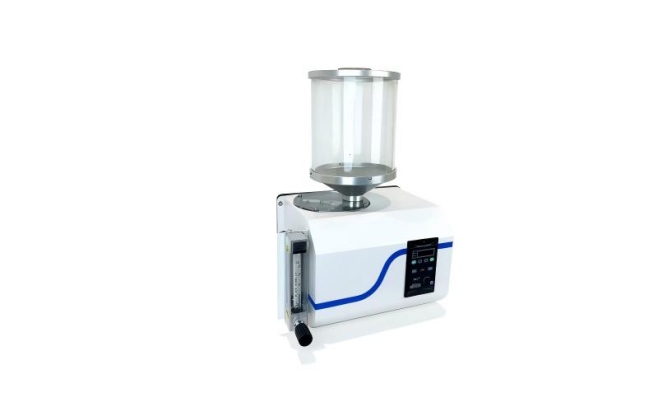
· Powder and delivery: composition certificate, particle-size distribution, morphology, flow consistency, storage condition and compatibility with the selected feeder and cladding head.
· Thermal and metallurgical risk: dilution, bonding, porosity, cracking and possible distortion; preheating or a different deposition strategy may be required after trials.
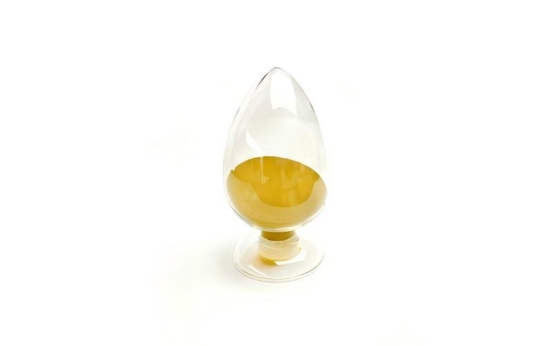
Spherical or near-spherical gas-atomized powders often support consistent feeding, but good powder flow does not prove that the deposited layer will meet service requirements. For a new alloy–substrate combination, use representative test deposits before production approval.
An engineering example: the same shaft, two different choices
Consider two steel shafts with comparable worn dimensions. Shaft A runs in a dusty environment and develops long, directional grooves. The selection process begins with abrasive wear: screen Fe-based wear-resistant powders, then assess the need for hard-particle reinforcement and check for impact-induced chipping. Shaft B operates against a mating sleeve in intermittent lubrication and shows material transfer and local seizure. Here, simply copying Shaft A’s hard coating could worsen galling. The selection begins instead with contact-pair compatibility, lubrication and the possibility of a suitable anti-galling alloy system.
The key difference is not the part name or diameter; it is the governing failure mechanism. If corrosion, temperature or prior repairs are also present, those constraints may change both shortlists.
Specify evidence, not just a powder name
A useful supplier inquiry should include:
· Part drawing and photos of damage; base alloy and any heat treatment or existing surface layer.
· Dominant wear mechanism, mating material, loads, lubricant or fluid chemistry, and operating temperature.
· Area and depth of repair; minimum remaining section; required finished dimensions and surface finish.
· Available laser, powder feeder, cladding head and access constraints; expected repair volume.
· Acceptance criteria: deposit thickness, bond quality, cracks and porosity, dimensional checks, and service-relevant wear or corrosion tests as needed.
Ask the supplier to document the proposed powder grade and particle-size range, processing assumptions, and trial/inspection plan. If more than one candidate is plausible, comparing deposited test coupons under relevant conditions provides a stronger basis for selection than catalogue hardness alone.
Where LZ Optical fits into the decision
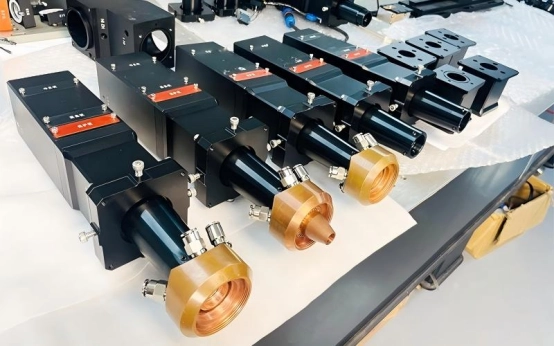
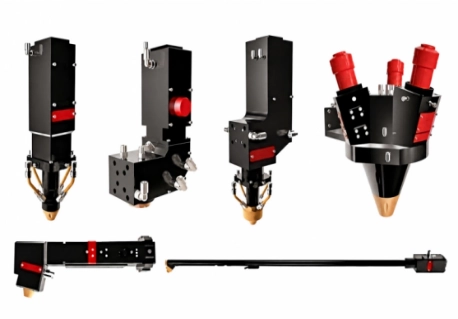
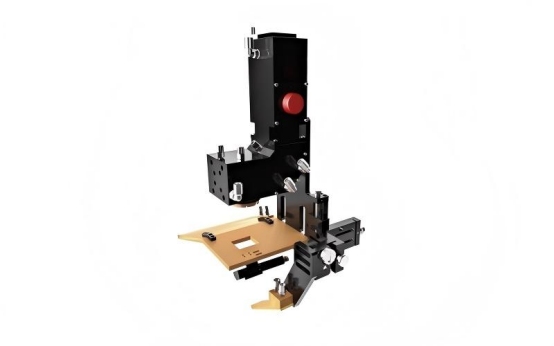
LZ Optical offers alloy powder categories and laser cladding system components, including heads and powder feeders. Its engineering support can be used to review material compatibility and process configuration. A productive inquiry starts with the part’s failure mechanism and service data, so the discussion can narrow from potential alloy families to a specific, testable repair approach.
Conclusion
A reliable wear repair begins with a diagnosis: abrasion, adhesive wear, corrosion-assisted wear, impact or thermal damage. That diagnosis establishes the performance targets; substrate compatibility and cladding trials then determine which alloy powder can deliver them. Use Fe-, Ni- and Cu-based materials as candidate families—not as a substitute for identifying the failure mechanism and validating the finished layer.
FAQs
Q: Is the hardest laser cladding powder best for severe wear?
A: Not necessarily. Abrasion may favor a hard deposit, but impact, fatigue, thermal stress and finishing requirements can make an excessively brittle layer unsuitable.
Q: When should I compare Fe-based and Ni-based powders?
A: Compare them when both wear resistance and environmental exposure matter. Fe-based grades can be attractive for compatible, cost-sensitive steel repairs; Ni-based grades deserve closer consideration when corrosive media or temperature demands justify them. Validate the specific grade rather than relying on the base-metal family.
Q: Can bronze powder be used for a damaged sliding surface?
A: Potentially, when the friction pair and duty conditions support it. Check load, lubrication, counterface compatibility and the feasibility of depositing and bonding the chosen bronze to the substrate.
Q: What should be tested before a repair goes into service?
A: At minimum, apply inspection criteria suited to the component: dimensional accuracy, visible or nondestructively detected defects, and deposit quality. For critical parts, add metallurgical and application-specific wear, corrosion or cycling tests.