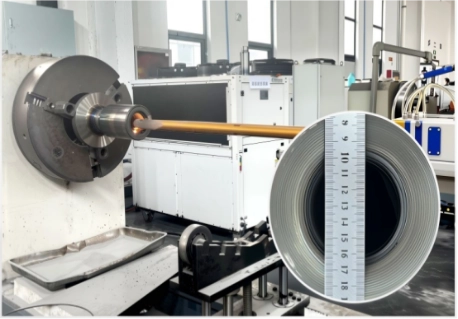
Laser cladding equipment demand is expanding most clearly in industries where component wear, corrosion, erosion, or dimensional loss creates expensive downtime. Mining, oil and gas, power generation, heavy machinery, hydraulic systems, valves, pressure equipment, and industrial remanufacturing are among the main application areas. Growth is being driven by the need to extend component life, repair high-value parts, reduce material waste, and bring more repeatable surface engineering into automated production.
The market is therefore growing through a combination of industry demand and application-specific equipment needs. Buyers are investing in repair and remanufacturing cells, robotic or CNC-integrated systems, internal-bore processing, controlled powder or wire delivery, and process monitoring. Compared with many conventional overlay processes, laser cladding can reduce heat input and improve distortion control while placing material only where it is needed.
Why the Market Is Moving Beyond Traditional Repair
Laser cladding can restore worn surfaces when the substrate condition, material compatibility, and process parameters are suitable. It can also add a wear-, corrosion-, or heat-resistant working layer to new parts and build material onto complex geometries. These capabilities align with broader industrial goals: extending asset life, reducing replacement demand, lowering material waste, and repairing valuable components closer to the point of use.
Several recent market studies independently project roughly double-digit annual growth for the global laser cladding market through the early 2030s, although published market-size estimates vary because research firms use different definitions and segmentation methods. Equipment-focused studies also report strong growth, but their figures can differ from broader laser-cladding market estimates. The consistent signal is that repair, remanufacturing, automation, robotic processing, additive manufacturing, and digitally controlled deposition are supporting continued adoption.
Laser Cladding Market Snapshot
Indicator | Current market signal |
Global outlook | Recent studies report about 8.8%–10.9% annual growth, depending on market scope and definition. |
Key industrial drivers | Repair, remanufacturing, precision surface engineering, wear/corrosion protection, and lower material waste. |
Technology trend | Automation, robotic cladding, process monitoring, CNC integration, and digitally controlled deposition. |
Major application sectors | Mining, oil & gas, power generation, heavy machinery, hydraulic systems, valves, and precision manufacturing. |
Regional signal | Asia-Pacific is reported as the largest 2025 region by one major study and the fastest-growing region by another. |
Market note: Recent published estimates differ by scope. Grand View Research reports 10.9% CAGR for 2026–2033 and Asia-Pacific at 34.5% of 2025 revenue; The Business Research Company reports 10.8% CAGR to 2030 and identifies Asia-Pacific as the fastest-growing region; Technavio reports 8.8% CAGR for the laser cladding equipment market for 2024–2029.
Material Features That Make Laser Cladding Attractive
Picking the right material is vital for every cladding project. The chosen coating must solve the specific operating problem. However, it must also bond tightly with the base metal. The material needs to stay stable during feeding, melting, cooling, and final polishing. Therefore, a successful process always starts by looking at the component itself. It does not begin with a powder catalogue.
Laser cladding feedstock is selected according to wear, corrosion, heat, erosion, and substrate compatibility. Common material groups can be summarized as:
• Iron-based alloy powders for cost-conscious repair, dimensional restoration, and general wear protection.
• Nickel-based alloy powders for corrosion resistance, elevated-temperature service, and demanding chemical environments.
• Specialty systems, including copper-based alloys, carbide-reinforced powders, and custom blends, for thermal, sliding, corrosion, or severe-abrasion requirements.
Compared with many conventional overlay methods, laser cladding concentrates energy in a localized zone. This can create a metallurgical bond with low dilution and a relatively small heat-affected zone, which helps reduce the risk of distorting the overall part. The deposited layer can then be machined or polished to meet dimensional requirements.
What Types of Equipment Are Expanding?
Buyer interest is increasingly moving toward complete process solutions rather than a standalone laser source. The appropriate configuration depends on surface geometry, coating material, part size, production volume, quality requirements, and the desired level of automation. Integrated systems, robotic cells, digitally controlled motion, application-specific heads, monitoring, and controlled powder or wire delivery are becoming more important as users move from individual repair jobs toward repeatable production.
Laser Cladding Equipment and Machines
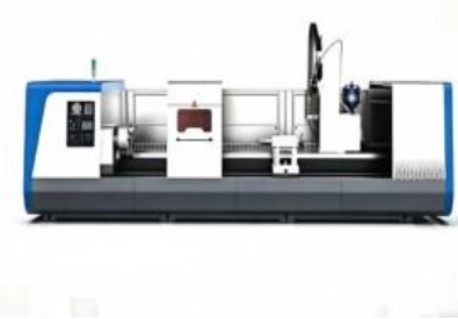
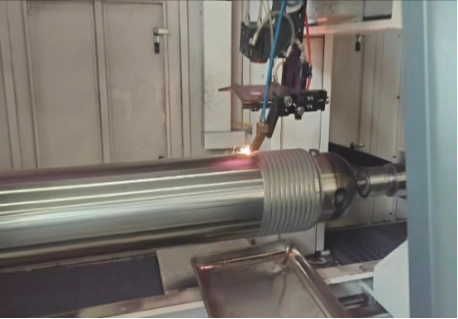
A standard laser cladding machine combines a laser source, motion system, powder or wire delivery, shielding gas, process monitoring, and control software. Systems may be configured for dedicated repair cells, CNC integration, robotic operation, or production lines. Inner-bore systems are an important specialized segment because they enable deposition on cylindrical internal surfaces that are difficult to access with conventional external cladding heads.
For a wider look at available system setups, please view our laser cladding equipment range.
Laser Cladding Heads and Beam Shaping
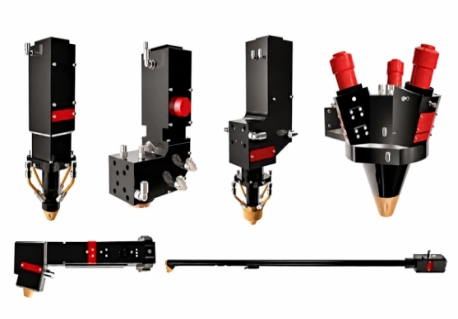
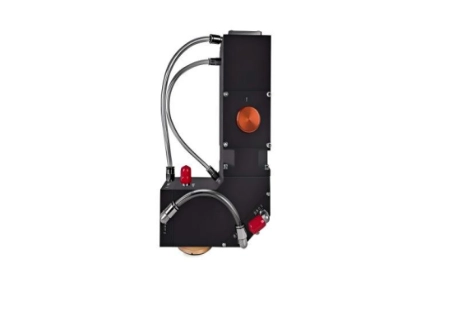
The cladding head plays a critical role in beam delivery, material convergence, shielding, and working-distance control. Coaxial powder feeding supports deposition from multiple directions, while annular and variable-beam designs can be matched to round surfaces, internal bores, wider tracks, or application-specific energy distributions. Beam shaping helps balance heat input, layer width, penetration, and processing speed so the optical setup can be matched more closely to the workpiece.
Our industrial laser cladding heads selection guide shows exactly how head design connects to part shapes and final process goals.
Powder Feeders and Feedstock Control
Stable feedstock delivery is an important part of process control. Gravity, continuous, and pneumatic powder feeders can be matched to different flow rates, material behavior, and factory layouts. Consistent material delivery can reduce track-to-track variation, support repeatable layer thickness, and simplify parameter transfer when a project moves from testing into production.
LZ Optical provides application-focused powder feeder options for different laser deposition requirements.
Where Is Demand Expanding by Industry?
Demand is strongest where localized wear or corrosion can interrupt a high-value asset, replacement parts are costly or slow to obtain, and repair quality must be repeatable. These conditions create practical opportunities for both maintenance-focused laser cladding and production-oriented surface engineering.
Mining and Heavy Machinery
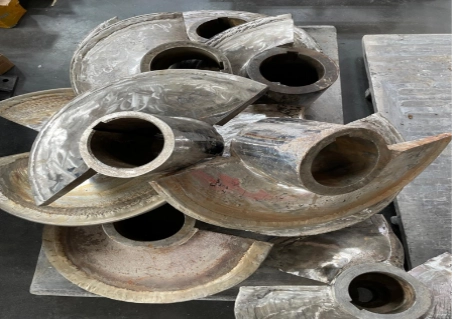
Mining equipment faces abrasion, impact, and difficult working conditions. Buckets, rollers, shafts, hydraulic parts, and other high-value components can often be rebuilt instead of discarded. Laser cladding adds wear-resistant material to the areas under the greatest load, reducing waste and helping operators return equipment to service sooner.
Oil and Gas, Valves, and Pressure Equipment
In oil and gas systems, corrosion, erosion, pressure, and temperature act together. Valve seats, stems, bores, plungers, and sealing surfaces need a controlled coating that will not compromise the substrate. For these parts, laser cladding can support localised hardfacing and corrosion protection while preserving valuable base materials.
Power Generation and Energy Infrastructure
Power plants rely on turbines, shafts, blades, pumps, and other components that must operate for long periods. As the energy sector adds new equipment and maintains ageing infrastructure, laser surface treatment and laser metal deposition are useful for targeted repair, dimensional restoration, and surface strengthening. The same principle applies to selected renewable-energy components exposed to weather and repeated mechanical loads.
Hydraulic and Precision Components
Hydraulic and other precision components often require controlled deposition, low distortion, and accurate dimensional restoration. Complex external surfaces can benefit from robotic or CNC integration, while bores and other internal cylindrical features require specialized processing heads. In these applications, process consistency, inspection, and parameter control are increasingly important alongside the equipment itself.
Where Is Regional Demand Expanding?
Regional demand follows the concentration of mining, energy, machinery, oilfield service, shipbuilding, repair, and remanufacturing activity. Asia-Pacific is a particularly important market: one major 2026 study reported the region as the largest laser cladding market in 2025, while another identified it as the fastest-growing region. North America and Europe also remain significant because of established aerospace-free industrial repair, energy, machinery, and advanced manufacturing bases.
Across regions, the common technology direction is greater integration. Recent market research identifies automation, robotic cladding, process monitoring, and digitally controlled deposition among the technologies supporting growth. This is shifting buyer interest from standalone laser sources toward integrated processing cells that combine optics, motion, feedstock delivery, software, and application support.
How We Approach Application-Focused Solutions
At LZ Optical, we develop laser cladding systems, processing heads, beam-shaping solutions, powder feeders, and alloy powders around the workpiece and its service conditions. We support internal-bore cladding, external surface repair, hardening, and industrial remanufacturing rather than treating every project as the same machine sale.
Our products cover coaxial, annular, wire, and variable-beam approaches, with options for robotic and CNC integration. We also work with iron-based, nickel-based, and copper-based alloy powders. This allows optical design, feedstock delivery, motion, and process requirements to be discussed as one coordinated system.
Explore our laser cladding products or review our inner surface laser cladding equipment for bore repair and internal cylindrical applications. Share your component type, substrate, wear or corrosion problem, and production requirement. Our application team can help evaluate whether laser cladding is suitable and which system architecture fits the application.
Conclusion
The laser cladding equipment market is expanding across industries that need longer component life, faster repair, lower material waste, and more controlled surface engineering. Mining, oil and gas, power generation, valves, heavy machinery, hydraulic systems, remanufacturing, and precision manufacturing are important demand areas. At the same time, buyers are placing more emphasis on integrated systems that combine head design, beam shaping, powder or wire feeding, motion, monitoring, materials, and application support. The most suitable configuration depends on the component, service condition, production target, and required level of automation.
FAQs
Q: What is the main growth driver for the laser cladding equipment market?
A: Longer component life, lower waste, and faster repair of high-value industrial parts.
Q: Which industries use laser cladding equipment most often?
A: Mining, oil and gas, power generation, valves, heavy machinery, and hydraulic equipment.
Q: Which laser cladding equipment segments are gaining attention?
A: Integrated systems, robotic cells, internal-bore equipment, application-specific processing heads, process monitoring, and controlled powder or wire delivery are gaining attention as manufacturers move toward more automated and repeatable cladding processes.