What Affects Laser Cladding System Cost for a Production Line?
The cost of a laser cladding system depends on more than the laser source rating. A production setup may include a laser source, motion platform, processing head, powder feeder, cooling system, safety enclosure, and process monitoring equipment. Software integration, operator training, and commissioning also contribute to the investment. The required configuration depends on workpiece geometry, coating alloy, processing area, production throughput, and the degree of automation.
Rather than comparing initial machine prices alone, plant managers should assess which equipment configuration and process parameters can meet their coating quality, throughput, and repeatability requirements.
This consideration is particularly relevant to production lines focused on component repair, remanufacturing, and automated surface engineering. A suitably configured laser cladding system may reduce replacement costs and lead times while providing wear- or corrosion-resistant surfaces. Its commercial value depends on matching the equipment to the intended workload and validated process requirements.
The Main Cost Drivers in a Laser Cladding Line
Before comparing supplier quotations, project teams should separate the production line into its principal cost categories. This provides a clearer basis for evaluating scope, identifying optional features, and assessing value.
Workpiece Size and Production Scope
Workpiece geometry, size, and mass strongly influence system configuration and cost. A small valve component may be processed using a compact head and positioner. A long shaft, hydraulic cylinder, or mining support column may require an extended machine bed, load-rated rotary supports, and a coordinated motion platform.
Facilities should clearly define:
l The maximum weight of the workpiece
l The largest diameter and total length
l The specific external or internal cladding area
l The target repair thickness
l The exact number of parts handled per shift
l The strictly required cycle time
l The choice between manual, CNC, or robotic operation
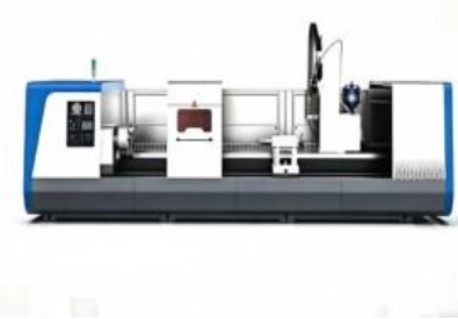
LZ Optical’s robotic laser cladding solution illustrates the importance of defining the complete equipment configuration. The overall system can be engineered for workpieces up to 10 tons and 20 meters in length, with laser source configurations in the 3–30 kW range, depending on the application and engineering design. These workpiece capacities and power ratings describe the integrated system—not the robot arm itself. Machine tools, robotic manipulators, and positioners can be incorporated as appropriate. Such heavy-duty configurations carry different investment and installation requirements from a compact repair cell.
Laser Power and Processing Speed
Laser power is one input to the cladding process, not a direct measure of deposition rate or final coating thickness. Higher available laser power can support higher deposition rates or wider processing tracks when the beam size, feed rate, travel speed, and thermal limits are matched accordingly. It does not automatically produce a thicker or better coating. Increasing installed power can also raise the cost of the laser source, cooling, electrical infrastructure, and safety measures.
Higher Power Is Not Always Better
Production teams should select laser power based on the validated process window rather than choosing the highest available rating. Compact internal-bore applications may operate at comparatively low power, depending on material and access constraints. Large-area, high-throughput applications may justify 12 kW, 20 kW, or higher power levels, particularly when wide beams and high deposition rates are required.
The right choice depends on:
l Required deposition rate
l Coating thickness
l Beam width
l Substrate material
l Powder or wire feed rate
l Heat input limit
l Acceptable distortion
l Daily production volume
An oversized laser installation may increase capital and operating costs without benefiting small-part repair. Conversely, insufficient available power can constrain a validated high-throughput process when paired with the required beam, material feed, and travel speed.
The Cladding Head and Optical Configuration
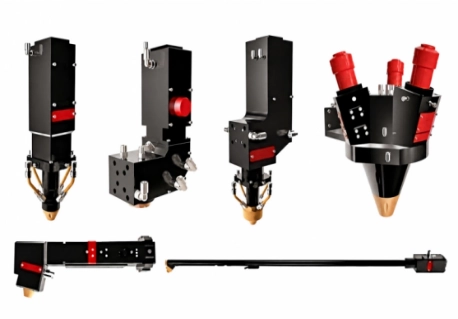
The laser cladding head is another big cost factor. It manages beam shape, working distance, and powder or wire delivery. It also handles cooling and the protection of optical parts. A basic circular head may cost less than a wide-beam, coaxial, wire-fed, or internal-bore design.
Choose the Head for the Application
Cladding heads should be selected for geometry, access, and feedstock. Wide-beam optics can increase the processing width per pass when supported by the available power and material feed. Compact coaxial heads may be suited to internal-bore work, while wire-fed heads offer an alternative where wire delivery aligns with the application requirements.
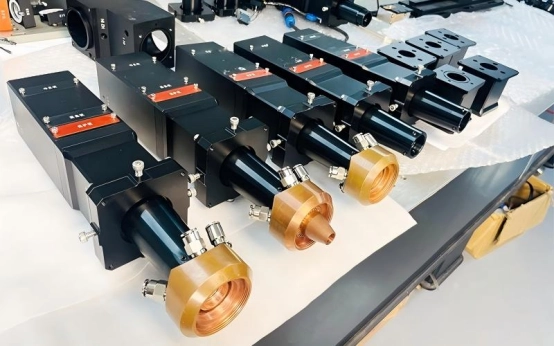
LZ Optical’s External Surface Coaxial Powder Feeding Cladding Head is made for wide-area coating. It is also used for dimensional restoration and industrial remanufacturing. It supports 6 kW, 12 kW, and 20 kW options. Its beam sizes reach up to 3 x 65 mm. Its powder utilization can hit up to 98% under proper process conditions. This efficiency may lower consumable waste over time.
Factories should compare:
l Beam shape and size
l Working distance
l Fiber interface
l Powder utilization
l Wire compatibility
l Cooling method
l Protective window design
l Maintenance and replacement cost
Powder, Wire, and Consumable Cost
Consumables influence operating cost through purchase price, deposition efficiency, waste, and rework. Powder-fed cladding supports a broad choice of alloy compositions and can be suitable for wear- and corrosion-resistant coatings. Wire-fed processes may offer efficient material utilization in compatible applications; the choice should reflect the required coating properties and process capability.
Material Choice Affects More Than Purchase Price
A lower-priced alloy is not necessarily the lowest-cost option over the component’s service life. Selection should consider hardness, corrosion resistance, cracking susceptibility, and machinability alongside substrate compatibility and process qualification. Premature coating failure can result in additional repair and downtime.
Common material choices include:
l Iron-based alloy powder for general wear repair
l Nickel-based alloy powder for corrosion and heat resistance
l Cobalt-based alloy for selected high-temperature and sealing applications
l Carbide-reinforced material for severe abrasion
l Stainless steel powder for balanced corrosion resistance
l Welding wire for high deposition efficiency
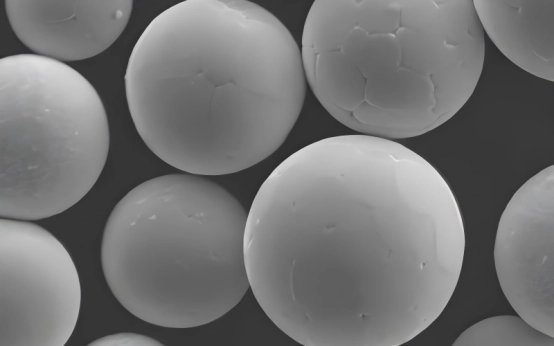
LZ Optical’s Nickel-Based Alloy Powder for Corrosion and Wear Resistance is intended for selected compatible substrates and applications requiring corrosion or wear protection. Its gas-atomized spherical morphology can support consistent powder handling under suitable storage and feeding conditions. Composition and process suitability should be confirmed for the intended service environment.
Powder feeders should also be part of the calculation. Normal factory talks may include 5 L, 10 L, or 20 L feeder sizes. The choice relies on production volume and refill frequency.
Automation and Robotic Integration
Automation can raise the starting investment. However, it may lower labor needs and boost repeatability. The cost relies on the robot, positioner, and fixtures. It also depends on path-planning software, the safety system, and the level of process monitoring.
When Robotic Laser Cladding Is Worth the Cost
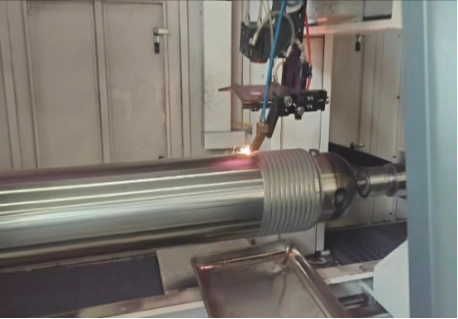
Robotic laser cladding may be appropriate for irregular geometries, varying workpiece sizes, curved surfaces, and repeated repair paths. Coordinated robot and positioner motion can maintain the required head orientation and working distance along complex trajectories.
It may be suitable for:
l Large shafts and rollers
l Hydraulic cylinders and rods
l Mining support components
l Valve bodies and sealing areas
l Petrochemical parts
l Sleeves and irregular heavy components
l Local repair zones on complex surfaces
At LZ Optical, we can pair robotic motion with positioners. We also offer adaptive height following and CCD molten pool monitoring. Closed-loop temperature control, oscillation, preheating, and cold or hot wire feeding are available too. These features increase the project cost. Still, they may be very useful when coating repeatability and production records matter.
Monitoring, Inspection, and Quality Control
Process monitoring and post-process quality validation serve different purposes and should be budgeted separately. In-process systems track conditions during deposition and may support corrective control, while offline inspection establishes whether the completed coating meets acceptance criteria.
Process Monitoring Cost
Depending on process risk and automation requirements, in-process functions may include:
l Melt-pool monitoring
l Temperature monitoring
l In-process height monitoring and adaptive height following
l Power and powder/wire feed feedback, including closed-loop control where supported
Quality Validation Cost
Offline quality validation may include:
l Coating thickness measurement
l Hardness testing
l Metallographic examination
l Dimensional inspection
l Surface roughness measurement
l Non-destructive testing (NDT), where required
For production repairs, representative cross-sections can reveal the coating, fusion zone, and substrate interface. Hardness and dimensional results help determine whether process parameters and alloy selection satisfy the specification. Where needed, non-destructive testing can assess relevant discontinuities. Acceptance criteria and inspection frequency should be defined before production, including how porosity, cracking, lack of fusion, and excessive dilution will be evaluated.
Production Line Integration and Site Requirements
The laser installation is one element of the full project cost. Site preparation may include electrical capacity, cooling water, ventilation, laser safety protection, materials storage, lifting facilities, and operator training.
Hidden Costs Should Be Discussed Early
Before signing a contract, buyers should ask if the quote includes:
l Installation and commissioning
l Robot or CNC programming
l Positioner and fixture design
l Cooling unit
l Safety enclosure
l Dust and fume control
l Powder feeder
l Initial alloy powder or wire
l Spare lenses and protective windows
l Operator training
l Remote technical support
l Process validation
l Maintenance documentation
LZ Optical’s product range covers laser cladding equipment, cladding heads, powder feeders, and alloy powders. A factory can thus talk about the equipment, consumables, and process route together. They do not have to buy separate parts from different sources.
Different Industries Need Different Configurations
The appropriate cladding configuration depends on service conditions and production objectives. Mining components may prioritize abrasion resistance and deposition throughput; valve repair may emphasize dimensional accuracy and finishing requirements. Oil and gas components may require coatings qualified for corrosion, erosion, or chemical exposure.
Common Application Areas
Laser cladding is often used for:
l Mining machinery
l Hydraulic equipment
l Oil and gas components
l Industrial valves
l Steel mill rolls
l Power-generation parts
l Heavy machinery
l Marine equipment
l Industrial remanufacturing
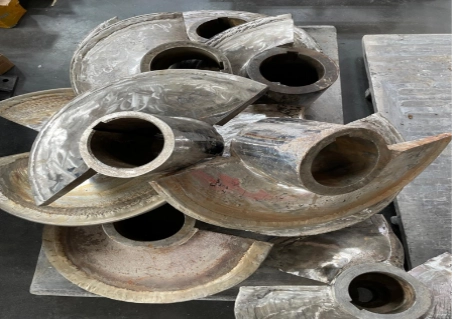
Laser cladding in mining may include hydraulic support columns and piston rods. Cutting picks, shafts, and sleeves are common too. These parts often experience abrasion, impact, and corrosion. They also have long working cycles. The needed coating material, head design, and motion platform affect the total system cost. The inspection plan plays a role as well.
How to Compare Quotes Properly
A factory should compare the complete production solution instead of just the machine price. Two suppliers may quote similar laser power. However, they might offer very different motion systems, process monitoring tools, and consumables. Training and support can also vary greatly.
Use Total Cost of Ownership
A useful comparison should include:
l Initial equipment price
l Installation and training
l Energy and cooling cost
l Powder or wire consumption
l Spare optical parts
l Maintenance frequency
l Labor requirements
l Repair cycle time
l Rework and scrap risk
l Expected component life after repair
A prospective cladding equipment supplier should explain the technical assumptions behind major cost items and, where practicable, conduct sample-part trials to demonstrate coating quality and process repeatability before line acceptance.
Conclusion
A production laser cladding system’s total cost is determined by workpiece dimensions, required throughput, laser and cladding-head configuration, feedstock, automation, and process control. Integration, inspection, site preparation, consumables, and technical support also contribute. The lowest initial quotation may not offer the lowest total ownership cost if it results in slow cycle times, high material losses, coating defects, or rework.
Before requesting final quotations, plant managers should define workpiece geometry, coating objectives, acceptable quality criteria, production rate, and operating conditions. They can then compare integrated laser power, beam and feedstock configurations, motion systems, monitoring, and quality-validation provisions on a consistent basis. A properly qualified system can support reliable repair and remanufacturing across mining, hydraulics, energy, industrial valves, and heavy machinery.
FAQs
Q: What affects laser cladding system cost most?
A: Main factors include laser power, automation levels, and workpiece size. Cladding head type, daily consumables, system monitoring, and specific installation needs also influence the final price.
Q: Is powder or wire cheaper for production cladding?
A: Using wire generally reduces wasted material. On the other hand, powder provides much greater flexibility for different alloys and processes.
Q: How do feeder size and powder use affect operating cost?
A: Standard feeders usually come in 5 L, 10 L, or 20 L sizes. Total powder use depends largely on the target coating area and required thickness. The specific kg/h feed rate is important too.