A laser cladding project should never begin with one simple question: “How much is the machine?” For a plant, the better question is whether the full process can repair real parts, survive daily production, and give stable coating quality after months of use. A good laser cladding system integrator should talk about materials, workpiece geometry, access limits, motion control, powder or wire feeding, inspection, and final machining.
This matters even more now. Many plants are trying to repair expensive parts instead of waiting for replacements. Mining, oil and gas, steel, power generation, hydraulic equipment, and valve repair teams are all under pressure to reduce downtime and material waste. Laser cladding fits this trend because it adds material only where the surface needs restoration or protection.
At LZ Optical, we design laser cladding equipment, processing heads, powder feeders, and alloy powders for industrial repair and remanufacturing. Our products are used for external surface repair, internal bore cladding, robotic laser cladding, and custom surface engineering work. For buyers, the real value is not only the machine. It is the match between equipment, material, process, and the part itself.
Start With the Part, Not the Machine
Before asking about laser power, a plant should describe the actual component. A shaft, valve seat, hydraulic rod, mill roll, sleeve, or pipe can all need different beam shapes and feeding methods. The same laser cladding system may perform well on one part but fail to meet the repair target on another if access, coating thickness, or heat control is not suitable.
What Damage Does the Part Have?
A system integrator should ask how the part failed. Fatigue cracking requires separate engineering assessment and crack removal or structural repair before a surface restoration process is considered. A worn hydraulic rod may need a uniform corrosion-resistant layer. A valve sealing surface may need a dense coating with good finishing behavior. A mining component may require a balance between abrasion resistance, hardness and impact toughness.
Plants should prepare basic repair information before the first technical discussion:
· Base material and hardness
· Damaged area and depth
· Remaining wall thickness
· Required coating thickness
· Final machining allowance
· Service environment
· Target wear or corrosion resistance
· Inspection requirements after repair
If the integrator does not ask these questions, the proposal may be too general.
Ask About Material Compatibility
Material selection decides whether the repaired surface will last. Laser cladding alloy powder or wire must match the substrate and the working environment. A high-hardness coating is not always the best answer. If the coating cracks, dilutes too much, or cannot be machined correctly, the repair will not meet the plant’s goal.
Which Alloy Should Be Used?
A laser cladding system integrator should explain why a certain powder or wire is recommended. Iron-based alloys are often used for cost-sensitive wear repair. Nickel-based alloys are common where corrosion, heat, or chemical attack is present. Cobalt-based alloys may be used for demanding valve and high-temperature surfaces. Carbide-reinforced coatings can help in severe abrasion.
LZ Optical provides laser cladding alloy powder options for wear resistance, corrosion protection, and service-life extension. We also develop powder solutions around the beam shape and feeding method, because powder flow, particle size, and melting behavior all affect the final layer.
A plant should ask:
· Is the coating compatible with the substrate?
· Will the material crack under the required thickness?
· Can the repaired part be machined after cladding?
· Is powder or wire better for this component?
· What hardness range can be reached?
· How will dilution be controlled?
Check the Cladding Head and Beam Design
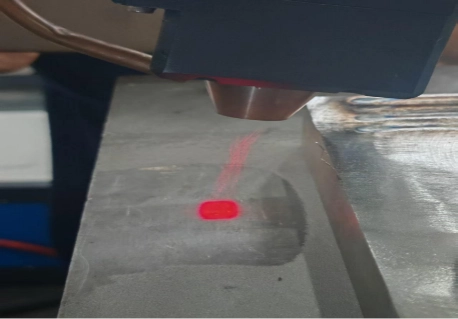
The processing head is where the laser, material, and workpiece meet. A suitable laser metal cladding head must provide stable beam delivery, controlled powder or wire feeding, proper working distance, and protection against dust, spatter, and heat. This is why the head should be selected by application, not by name alone.
External Surface Repair
For large shafts, hydraulic rods, rollers, pipes, and mining support columns, wide-area external repair is common. The plant should ask about beam width, overlap rate, working distance, powder use, and whether multi-layer deposition is stable.
LZ Optical’s external surface coaxial powder feeding cladding head is developed for wide-area coating, component repair, and remanufacturing. It supports high powder utilization, stable multi-layer cladding, and thick protective coating buildup. When comparing cladding head options, plants should look beyond the model name and review working distance, beam shape, cooling method, powder delivery, and access size.
Internal Bore Repair
Internal surfaces are harder to reach. The cladding head must enter the bore, hold the laser spot at the right position, and maintain stable material delivery in a narrow space. This is important for hydraulic cylinders, valve bodies, sleeves, bearing housings, pipes, and pump components.
LZ Optical’s inner surface laser cladding equipment supports 3-30 kW laser power and can work with circular, square, or rectangular spots. For compact internal-bore repair, plants can evaluate LZ Optical’s 2-Inch Coaxial Laser Metal Deposition Head based on access diameter, spot size, cooling method, powder delivery, and target coating thickness.
Review the System Layout and Motion Control
A laser cladding system is not just a laser source and a head. It includes motion units, positioners, powder or wire feeders, cooling, dust protection, software, and process monitoring. A plant should know how the whole cell will fit into the workshop, how parts will be loaded, and how repeatable the movement will be.
Manual, CNC, or Robotic Motion?
Simple round parts may work well with a rotary axis and linear movement. Large irregular parts may need robotic laser cladding. Components with changing surface height may require adaptive height following and more careful path planning.
LZ Optical’s robotic laser cladding system can be integrated with machine tools, robotic arms, and positioners for large or complex components. The overall system can be engineered for long workpieces, heavy parts, and repair paths that need repeatable motion control. This is useful for mining machinery, valve parts, rotors, sleeves, petrochemical equipment, and heavy machinery components.
Plants should ask:
· How will the part be held and rotated?
· Can the system handle irregular surfaces?
· Is offline path planning needed?
· How is the cladding height controlled?
· Can the system be upgraded later?
· What floor space, cooling, and safety protection are required?
Ask How Process Control Is Handled
Process control is where many projects succeed or fail. A beautiful sample part does not prove the system can run daily production. The integrator should explain how the melt pool, temperature, powder flow, travel speed, overlap, and laser power will be controlled during real repair work.
Monitoring and Repeatability
Modern laser cladding systems may include CCD molten pool monitoring, closed-loop temperature control, adaptive height following, oscillation, online preheating, and cold or hot wire feeding. These functions are valuable when a component is long, uneven, or expensive to scrap.
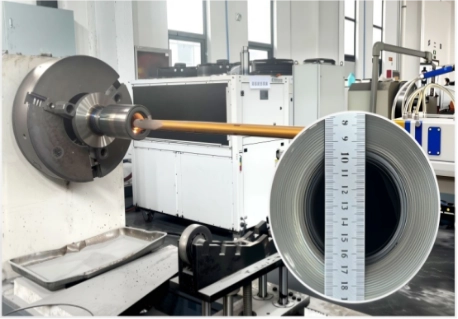
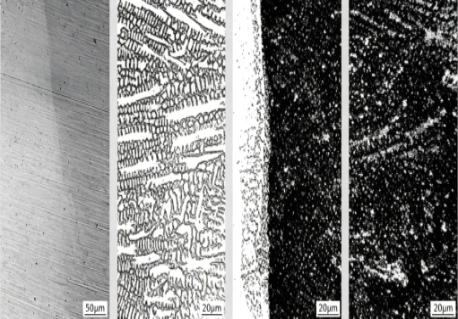
Plants should ask for practical proof, such as sample testing, coating cross sections, hardness results, surface finish data, and a repair procedure. For example, in one shaft repair test using 42CrMo steel with ST6 cobalt-based alloy, the process used 4800 W laser power, 25 mm/s scanning speed, 1.8 mm screw pitch, 4.3 mm lap width, 20 mm working distance, and 20 L/min shielding gas. The cladding layer thickness reached about 1.36 mm, and the measured hardness values were around 518, 510, and 510 HV, while the heat-affected zone measured about 330 and 349 HV. Metallographic inspection at 200x showed no obvious pores in the coating. For mining applications, the discussion should also cover impact wear, corrosion from mine water, hydraulic sealing surfaces, and field repair cycles.
A good integrator should be able to explain:
· How process parameters are developed
· How coating defects are checked
· How operators are trained
· How powder flow is measured
· How heat input is limited
· How repair quality is recorded
Compare Product Categories Before Buying
Different plants need different product routes. Some need a full machine for large external parts. Others need a processing head for integration into an existing cell. Some need powder feeders and materials. Others need a turnkey repair line with automation and inspection support.
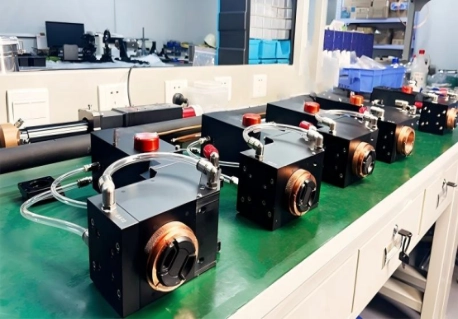
LZ Optical’s laser cladding equipment includes inner surface equipment, external laser processing equipment, and robotic systems. LZ Optical's laser processing portfolio includes laser cladding heads for coaxial powder feeding, wire feeding, internal bore processing, wide-beam deposition and square-beam applications, as well as dedicated laser hardening heads for surface heat treatment. A plant should ask the integrator to compare:
· Laser cladding equipment for full production cells
· External surface heads for shafts, rolls, rods, and pipes
· Internal bore heads for cylinders, sleeves, and valve bodies
· Wire-fed heads for high material use efficiency
· Powder feeders for stable metal powder delivery
· Alloy powders for wear, corrosion, and heat resistance
· Robotic systems for complex or repeatable repair paths
This comparison helps prevent overbuying. It also prevents choosing a small system that cannot handle future repair work.
Match the System to the Industry
Each industry has its own repair pressure. Oil and gas parts face corrosion, erosion, pressure, and long procurement cycles. Mining parts face abrasion, impact, and dirty working conditions. Steel mill parts face high contact stress and thermal cycling. Valves require sealing performance and tight machining control.
Main Application Industries
Laser cladding is widely used in:
· Mining machinery
· Oil and gas equipment
· Industrial valves
· Power generation
· Hydraulic systems
· Steel and metallurgy
· Marine and offshore equipment
· Heavy machinery repair
· Industrial remanufacturing
For mining, common parts include hydraulic support columns, cutting picks, cylinder barrels, piston rods, shafts, and sleeves. For oil and gas, cladding is useful on valve bodies, plungers, pipes, drilling tools, and pump parts. For valves, the process can rebuild sealing bands, ball surfaces, seats, stems, and bores.
A good integrator should not sell the same process for every industry. The coating, beam shape, process speed, and inspection plan should match the service environment.
Ask About Support After Installation
A laser cladding system needs process support after delivery. Plants should ask who will help with installation, parameter testing, operator training, spare parts, and troubleshooting. Good after-sales support can shorten the learning curve and reduce the risk of poor coating quality in the first months.
LZ Optical provides application-based engineering support from optical configuration and equipment selection to process development and system integration. Our team can help evaluate the workpiece, coating requirements, automation conditions, and production plan before recommending a technical route.
Before signing, ask:
· Will the supplier test sample parts?
· Are process parameters included?
· Is operator training provided?
· How are spare lenses and nozzles supplied?
· Can the system be modified for future parts?
· What remote support is available?
· How are coating quality problems diagnosed?
Conclusion
Choosing a laser cladding system integrator is a technical decision, not just a purchase decision. Plants should ask about the part, material, coating target, cladding head, motion system, monitoring method, inspection plan, and long-term support. The right integrator will study the repair problem before recommending equipment. This is especially important as more industries move toward repair, remanufacturing, and cleaner surface treatment. For high-value shafts, rods, valves, cylinders, rolls, mining equipment, and oilfield parts, laser cladding can reduce replacement pressure and extend service life. But the result depends on careful process design. Ask better questions first, and the system choice becomes much clearer.
FAQs
Q: What should I ask a laser cladding system integrator first?
A: Start with part material, damage depth, coating target, machining allowance, and service conditions.
Q: Can a laser cladding system integrator support powder and wire feeding?
A: Yes, many systems support powder feeding, wire feeding, or both, based on repair needs.
Q: How should powder feeder capacity be sized for production?
A: It should be based on powder mass flow rate, bulk density, required continuous operating time, number of feed channels, and refill strategy—not hopper volume alone.