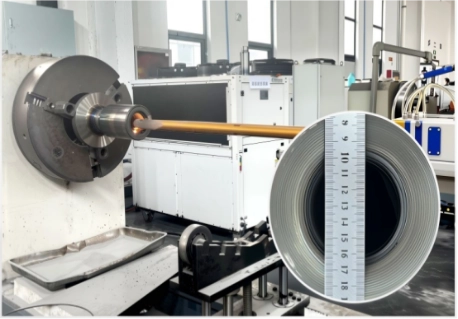
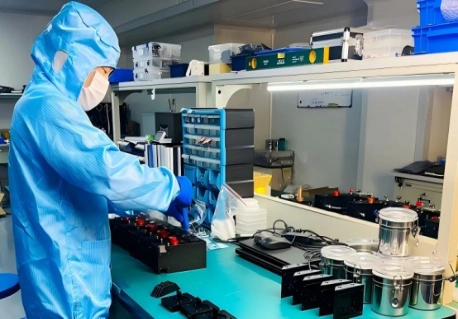
Choosing a laser cladding system supplier is not simply a matter of comparing laser power or equipment prices. A factory is investing in a complete repair process that must work with real components, real materials, and real production demands.
The more important questions are practical:
· Can the supplier understand the damaged part?
· Can it validate the process before delivery?
· Can it provide stable equipment and suitable materials?
· Can it train operators and support the system after installation?
· Can it help the factory achieve repeatable coating quality?
These questions matter as manufacturers pay more attention to remanufacturing, supply-chain resilience, lower material waste, and longer component service life. A reliable supplier should provide more than a machine. It should provide a workable route from sample testing to daily production.
At LZ Optical, we provide laser cladding equipment, cladding heads, powder feeders, alloy powders, process development, and application support. Our work focuses on industrial component repair, surface strengthening, corrosion protection, and remanufacturing.
Start With Supplier Capability, Not Product Price
A low quotation does not always represent a low total cost. If a system cannot process the factory’s parts, or if the supplier cannot support process development, the initial saving may quickly disappear through trial work, downtime, and repeated repairs.
Before comparing prices, factories should assess whether the supplier has the technical depth to understand the complete application.
Can the Supplier Understand the Repair Task?
A capable laser cladding system supplier should ask about the part before recommending equipment. A hydraulic rod, mining support column, valve seat, roll, sleeve, pipe, and drive shaft may require different process conditions.
The supplier should review:
· Base material and hardness
· Damaged area and remaining wall thickness
· Wear, corrosion, erosion, or impact conditions
· Required coating thickness
· Final machining dimension
· Machining allowance
· Permitted heat input
· Expected service life
· Inspection requirements
· Repair quantity and production cycle
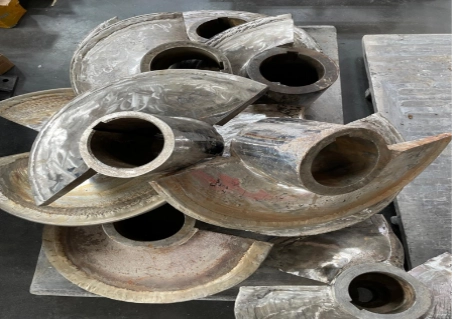
This is particularly important for repair and restoration of parts laser cladding projects. In many cases, the original component is still structurally valuable, but its surface can no longer meet service requirements. The supplier should explain whether the part is suitable for cladding and what preparation is required before processing.
Verify the Supplier’s Material Knowledge
A coating is only useful when it matches the substrate and operating environment. A supplier that talks only about hardness may not be looking at the whole repair problem. Cracking, excessive dilution, poor machinability, or weak corrosion resistance can all reduce the value of a repair.
Can the Supplier Select the Right Alloy?
Factories should ask how the supplier chooses powder or wire. Iron-based alloys may be suitable for cost-sensitive wear repair. Cobalt-based alloys can be used for demanding sealing surfaces and high-temperature wear. Carbide-reinforced coatings may be considered for severe abrasion.
For corrosive or high-wear conditions, nickel-based alloy powder may be suitable for compatible steel substrates. LZ Optical describes its nickel-based powder range as suitable for corrosion protection, wear resistance, and applications requiring improved crack resistance. The powder is gas atomized with a spherical or near-spherical form to support stable feeding and consistent deposition.
Factories should ask:
· Is the alloy compatible with the base material?
· Can it meet the required hardness range?
· Will it resist cracking at the target thickness?
· Can the coating be machined after deposition?
· Is the material suitable for wear, corrosion, heat, or combined conditions?
· What powder size and feeding rate are required?
A dependable supplier should connect alloy selection with beam shape, powder delivery, heat input, and the final service condition.
Assess the Cladding Head and Optical Design
The laser source is important, but the processing head has a direct effect on deposition stability. It controls the beam profile, working distance, powder or wire delivery, cooling, and protection of optical components.
A factory should confirm whether the supplier is a real cladding head manufacturer or only a reseller assembling equipment from unrelated parts.
Does the Head Match the Workpiece?
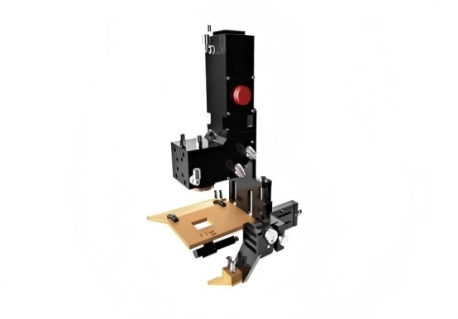
An external cylindrical component needs a different solution from a narrow internal bore. A wide beam may improve coverage on large surfaces, while a compact coaxial head may be necessary for deep-hole repair. The supplier should explain why a specific laser cladding head is suitable for the geometry.
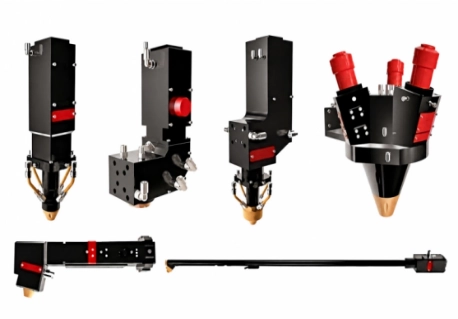
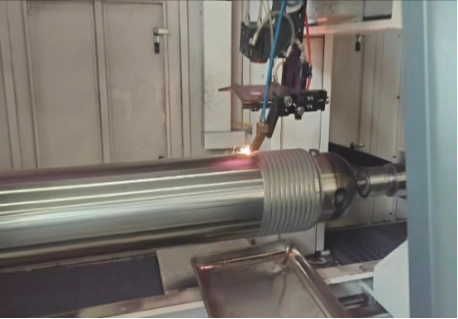
For large shafts, hydraulic rods, rollers, support columns, and pipes, LZ Optical offers an External Surface Coaxial Powder Feeding Cladding Head. The product is designed for external surface repair, wide-area coating, and multi-layer deposition. Its selection should be based on beam width, working distance, powder delivery, cooling, and required coating thickness.
For small internal bores, the 2-Inch Coaxial Laser Metal Deposition Head is designed for confined internal surfaces and deep-bore applications. Factories should check the bore diameter, processing depth, spot size, optical interface, and material feeding method before selecting this type of head.
Check Whether the Supplier Can Validate the Process
A supplier should be able to prove that the proposed system can produce the required coating. A product brochure is not enough. Factories need sample testing, inspection results, and a clear acceptance method before placing a large order.
What Evidence Should the Supplier Provide?
A practical validation program may include:
· Sample cladding on the factory’s own material
· Cross-section inspection
· Coating thickness measurement
· Hardness testing
· Metallographic images
· Surface finish data
· Dimensional inspection
· Crack and pore evaluation
· A written process procedure
For example, one shaft repair test used 42CrMo steel and a cobalt-based ST6 alloy. The process used 4800 W laser power, a scanning speed of 25 mm/s, a screw pitch of 1.8 mm, a lap width of 4.3 mm, a working distance of 20 mm, and shielding gas at 20 L/min. The cladding layer reached approximately 1.36 mm, with measured hardness values around 518, 510, and 510 HV.
Metallographic inspection at 500x can show the cladding layer, bonding zone, and substrate. These images help the factory check whether the coating is properly fused and whether obvious pores or cracks are present. The supplier should also explain which results are acceptance criteria and which are only reference data.
Compare Equipment Categories and Delivery Scope
Factories should confirm exactly what is included in the quotation. A laser cladding project may require more than a laser and processing head. Motion equipment, powder feeding, cooling, software, safety protection, monitoring, installation, and training can all affect the final cost and production result.
Is the Supplier Offering a Complete Solution?
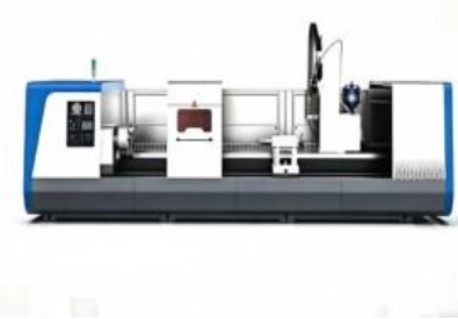
LZ Optical’s laser cladding equipment covers external surface repair, internal bore cladding, and automated processing. The company’s product range also includes cladding heads, powder feeders, and alloy powders.
Factories should compare whether they need:
· External surface equipment for shafts, rolls, rods, and pipes
· Internal surface equipment for cylinders, sleeves, bores, and valve bodies
· Robotic systems for irregular or large components
· Powder-fed or wire-fed cladding heads
· Wide-beam or square-beam processing
· Powder feeders with stable delivery
· Alloy powders for wear and corrosion protection
· Monitoring and temperature-control modules
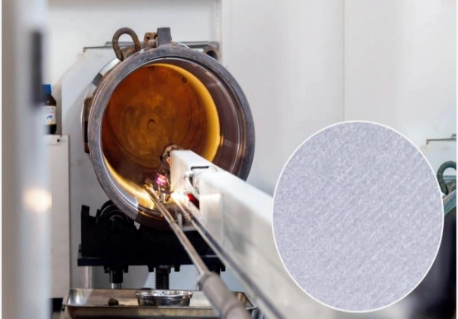
The inner surface laser cladding equipment supports 3-30 kW laser power, circular, square, and rectangular spots, and optional functions such as CCD molten pool monitoring, closed-loop temperature control, adaptive height following, oscillation, preheating, and wire feeding.
Evaluate Automation and Process Control
Modern factories are looking for repair methods that reduce downtime and improve repeatability. Automation is especially useful when a plant repairs large parts, irregular geometries, or different component types throughout the year.
Can the System Support Repeatable Production?
Robotic laser cladding can provide flexible multi-axis movement for shafts, rollers, hydraulic rods, valve components, mining parts, sleeves, and other complex workpieces. LZ Optical’s robotic system is designed for workpieces up to 10 tons and 20 meters in length, with optional process monitoring, adaptive height following, oscillation, preheating, and wire feeding.
A supplier should explain:
· How the component will be positioned
· Whether a robot, CNC axis, or rotary table is appropriate
· How the motion path will be created
· How changes in surface height will be handled
· How powder flow and laser power will be controlled
· How operators will be trained
· How process data will be recorded
The factory should also ask for a clear plan covering installation, commissioning, and production acceptance.
Review Applications in the Target Industry
A supplier’s industry experience matters because different components fail in different ways. Mining parts are exposed to abrasion, impact, corrosion, and dirty working conditions. Oil and gas equipment may face pressure, erosion, and chemical attack. Valve sealing surfaces require controlled geometry and reliable finishing.
Does the Supplier Know the Application?
Common laser cladding applications include:
· Mining machinery
· Oil and gas equipment
· Industrial valves
· Hydraulic cylinders and rods
· Steel mill rolls
· Power-generation components
· Heavy machinery
· Marine and offshore parts
· Industrial remanufacturing
In laser cladding in mining, typical components include hydraulic support columns, piston rods, cylinder barrels, cutting picks, shafts, and sleeves. The supplier should understand not only how to deposit a coating, but also how the repaired component will be machined, inspected, assembled, and used in the field.
Check Training, Spare Parts, and Long-Term Support
Delivery is only the beginning of a laser cladding project. The factory will need process training, maintenance guidance, optical protection, spare parts, and troubleshooting support. Without these services, even a technically capable system may not reach stable production.
What Should Be Included After Delivery?
Before signing a contract, ask:
· Is sample testing included?
· Is installation and commissioning included?
· Will operators receive process training?
· Are process parameters documented?
· Are spare lenses, nozzles, and protective windows available?
· What remote support is provided?
· Can the system be upgraded later?
· How are quality problems analyzed?
· What documents are supplied for maintenance and acceptance?
At LZ Optical, we combine optical design, laser processing heads, powder feeders, alloy powders, control systems, and application engineering. Our goal is to help factories move from a tested sample to a repeatable repair process, rather than simply placing equipment on the workshop floor.
Conclusion
Factories should assess a laser cladding system supplier by looking at the complete delivery chain: application analysis, material selection, equipment design, sample validation, installation, training, quality inspection, spare parts, and technical support. The right supplier should be able to explain how the proposed system will repair a specific component and how the result will be checked.
Price remains important, but it should not be the first or only criterion. A reliable supplier can reduce technical uncertainty before purchase, provide evidence during testing, and continue supporting the factory after installation. For shafts, hydraulic rods, rolls, valves, cylinders, mining components, and oilfield parts, this complete approach can make laser cladding a practical route for longer service life and more efficient remanufacturing.
FAQs
Q: What should factories ask a laser cladding system supplier first?
A: Ask about sample testing, material compatibility, coating quality, installation, training, and after-sales support.
Q: Can LZ Optical provide equipment and materials together?
A: Yes. We provide equipment, cladding heads, powder feeders, and alloy powders.
Q: How should factories compare powder feeder capacity?
A: Compare 5 L, 10 L, and 20 L options with powder delivery measured in kg/h.